Get Quote
Home > News > Project Case Studies > How a Commercial AHU Retrofit Achieved 42% Energy Savings with an EC Fan Wall Upgrade

How a Commercial AHU Retrofit Achieved 42% Energy Savings with an EC Fan Wall Upgrade

JULY 17, 2026

enhanced_cooling_tower.png

For large commercial buildings, rising energy costs are making HVAC efficiency a business priority rather than simply an engineering concern.

Shopping malls, exhibition centers, airports, and wholesale markets operate their Air Handling Units (AHUs) almost continuously. Many of these systems still rely on legacy belt-driven AC fans, resulting in high energy consumption, increasing maintenance costs, and limited control flexibility.

Recently, our engineering team supported the retrofit evaluation of a large commercial wholesale complex in China, where the objective was clear:

Improve energy efficiency without disrupting daily operations.

The Challenge

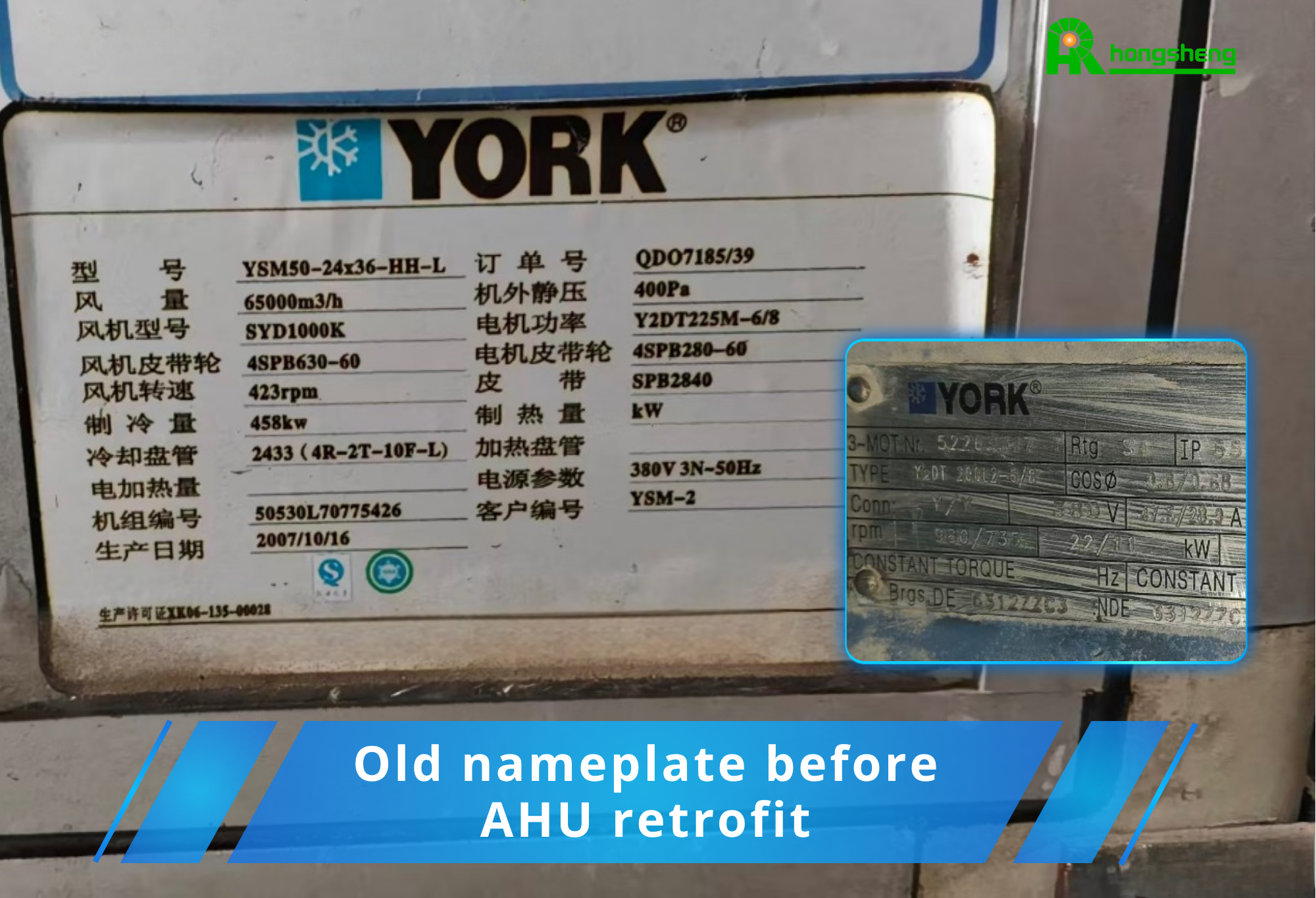
The existing AHU delivered approximately 65,000 m³/h of airflow at 400 Pa external static pressure, powered by a traditional 30 kW AC fan system.

Old nameplate before AHU retrofit.png

Pic.1 Old nameplate before AHU retrofit

Although the system continued to operate, several issues had become increasingly apparent:

l High electricity consumption during year-round operation

l Poor efficiency under partial-load conditions

l Aging equipment with growing maintenance requirements

l Difficult replacement due to limited installation space

Rather than replacing the entire AHU, the customer was looking for a more practical retrofit solution that could maximize the value of the existing infrastructure.

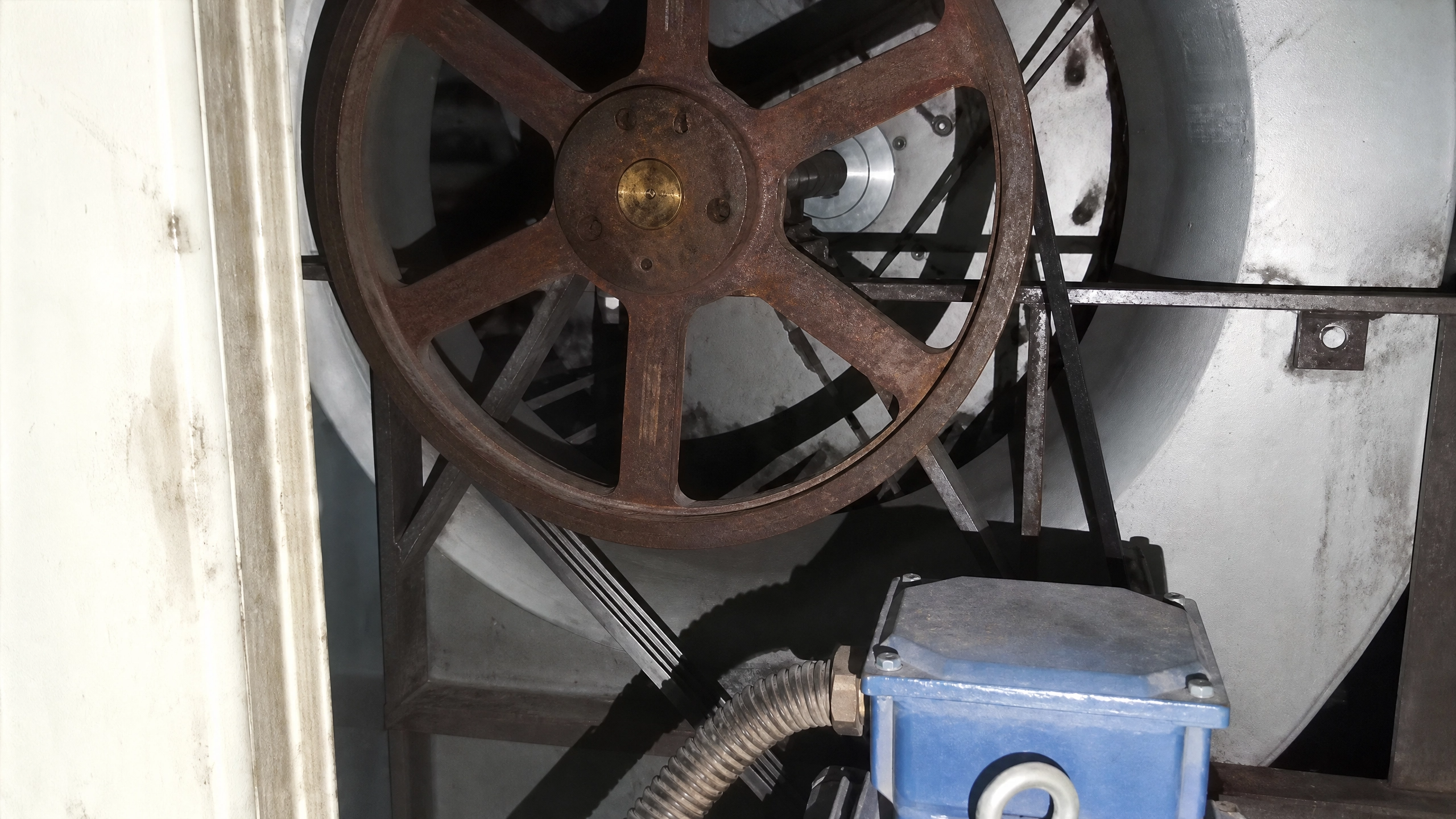
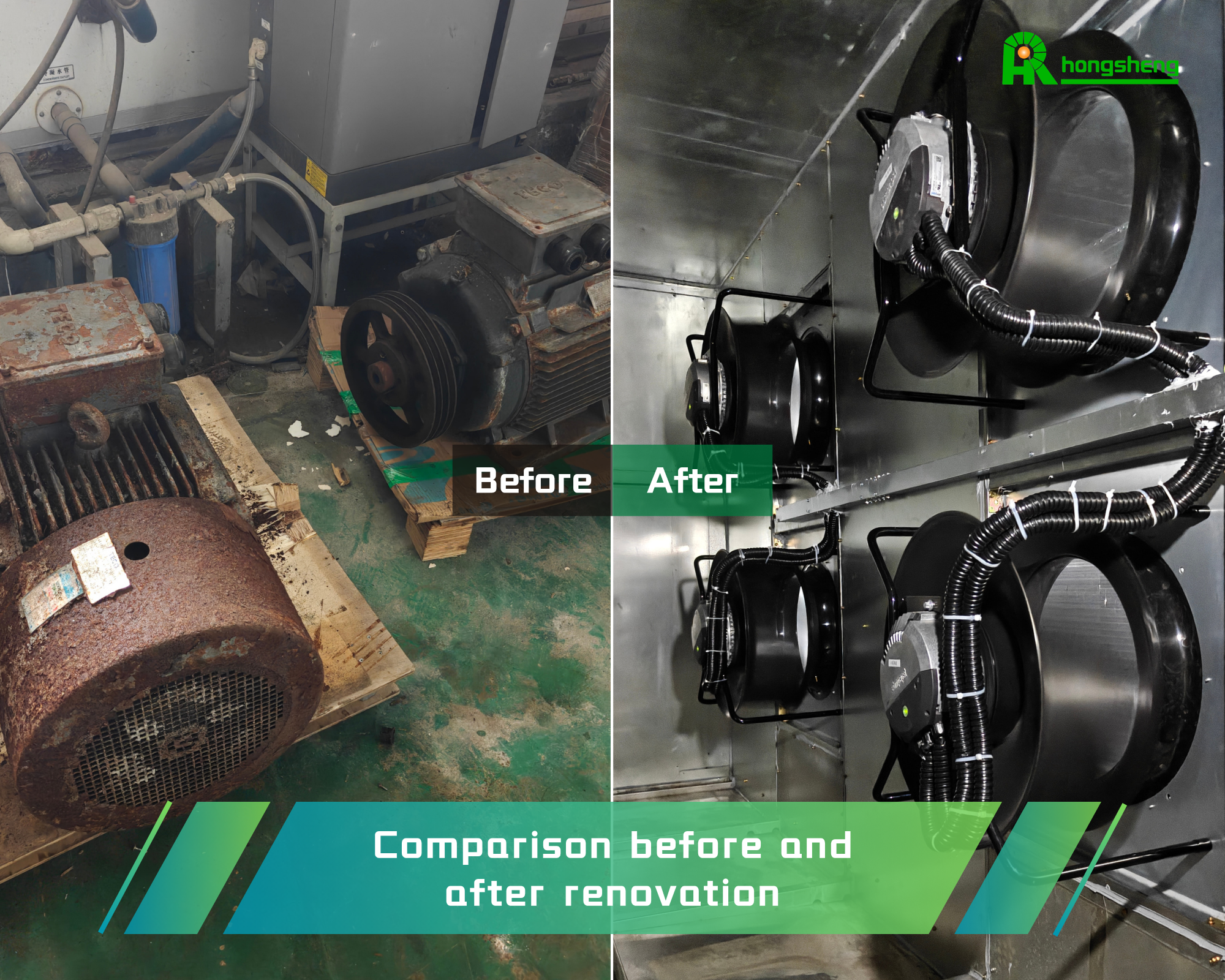
enhanced_image.png

Pic.2 Old belt driven fan

The Solution

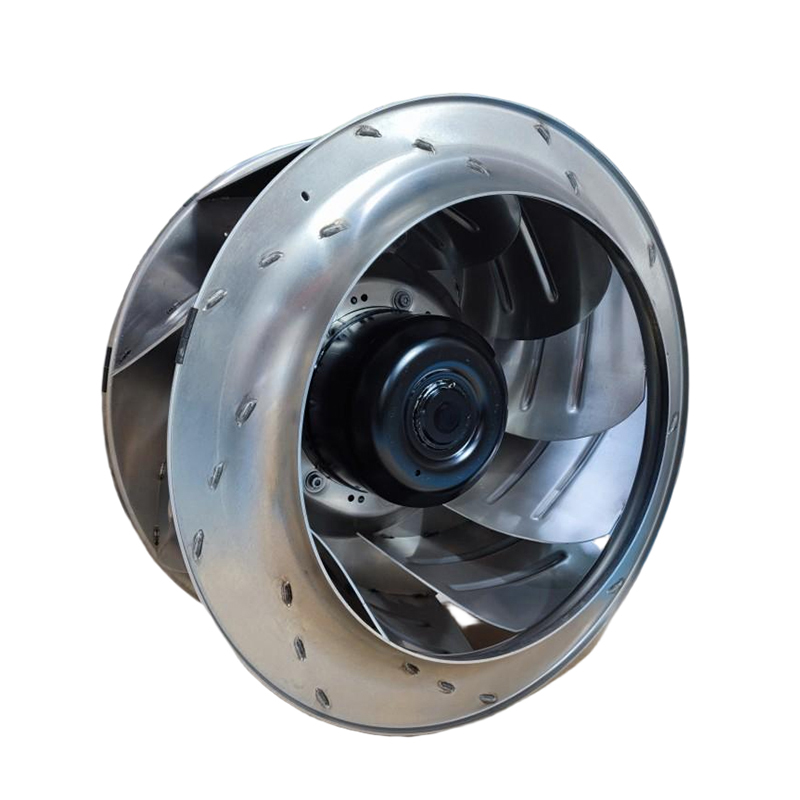
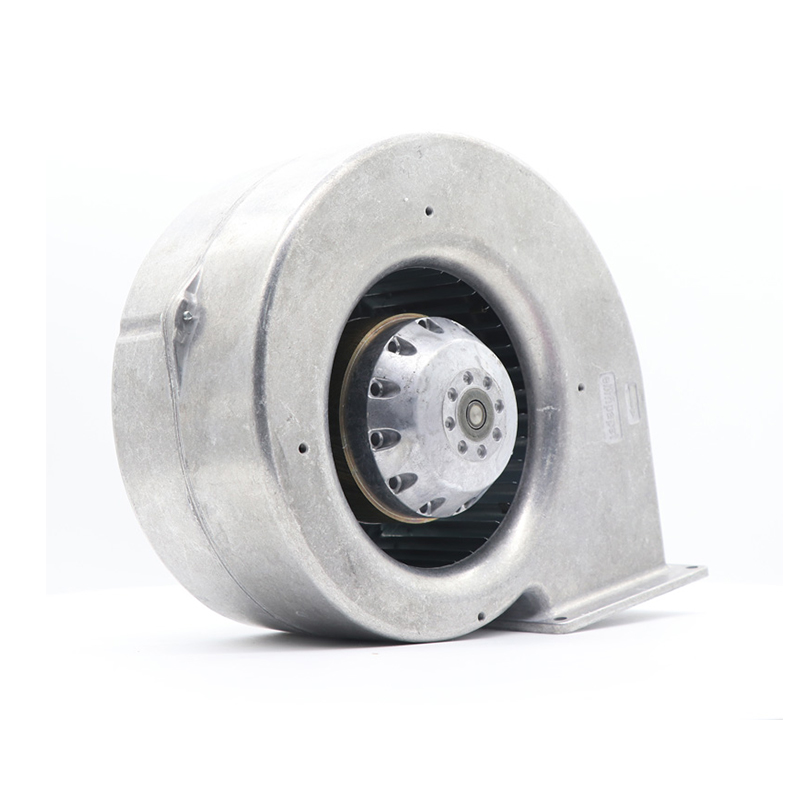
After evaluating the operating conditions and airflow requirements, a modular EC Fan Wall solution was proposed.

Compared with conventional AC fan systems, EC fan arrays provide several important advantages:

l Up to 42% projected energy savings

l Demand-based speed control for improved part-load efficiency

l Modular installation with reduced retrofit downtime

l Redundancy that improves operational reliability

l Easier future maintenance through independent fan modules

Instead of treating the fan as an individual component, the project optimized the entire airflow system to improve both efficiency and long-term reliability.

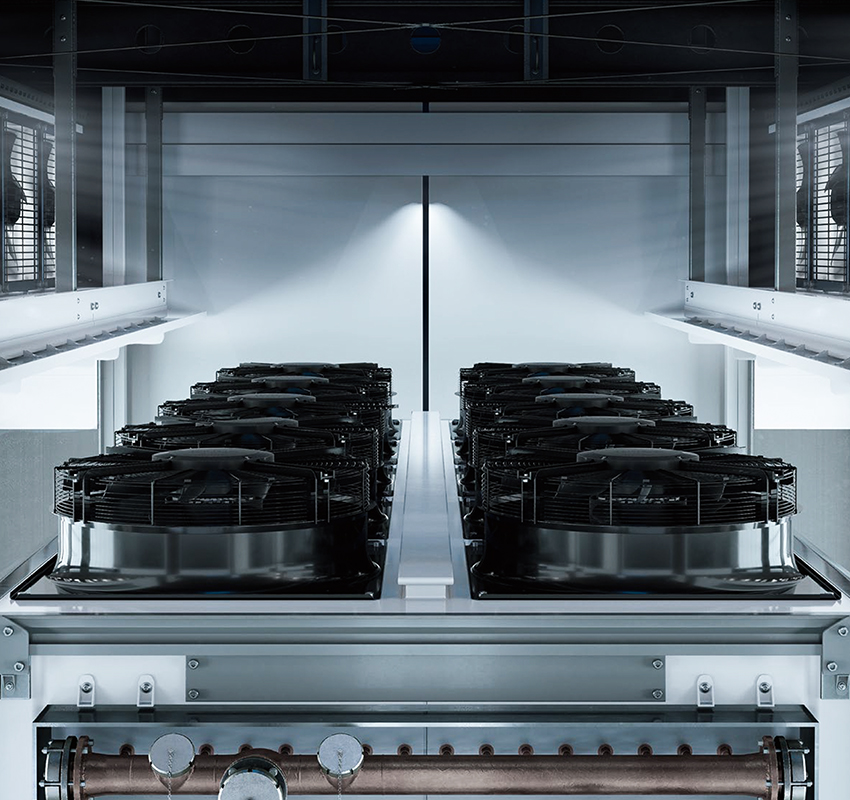
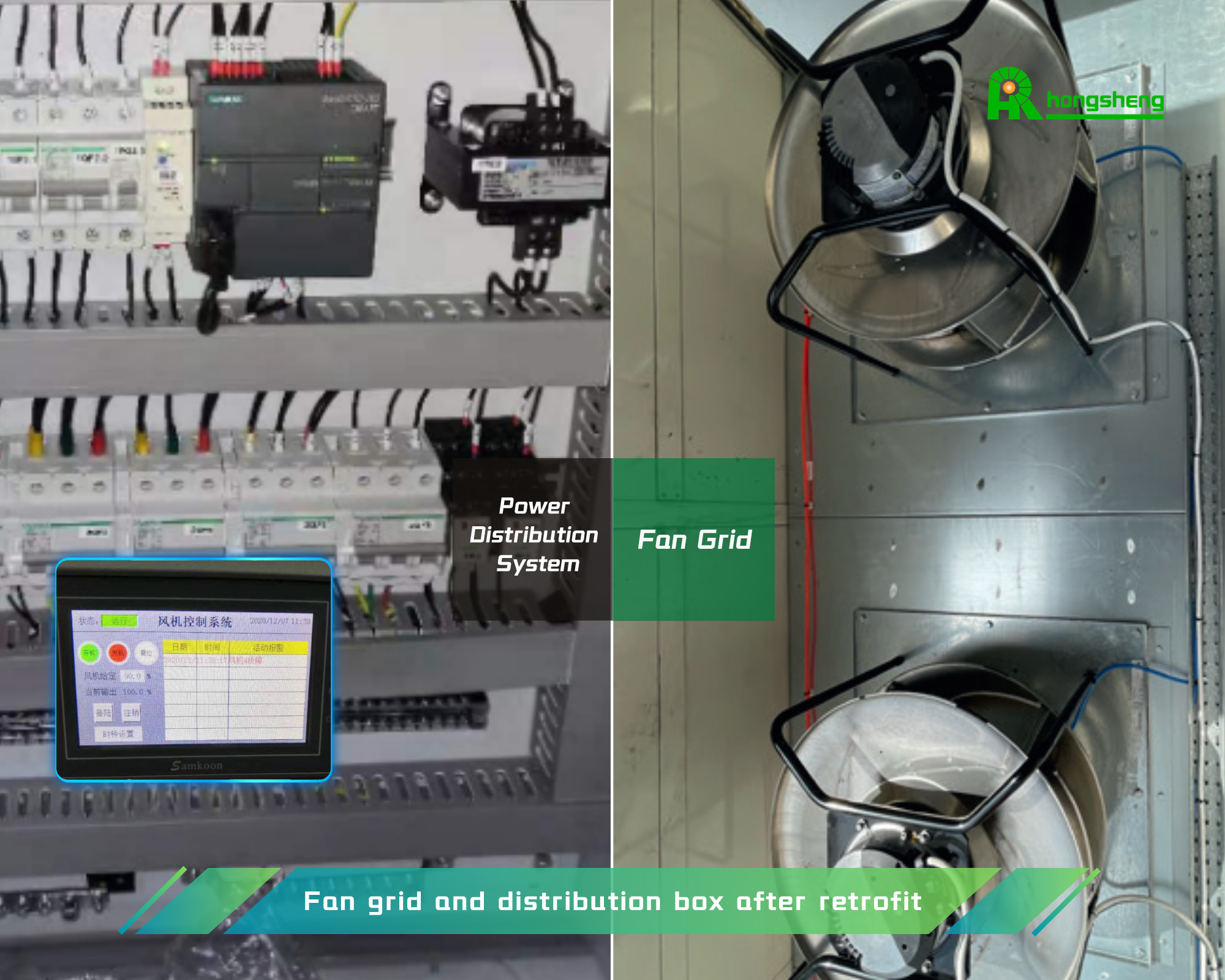
Fan grid and distribution box after retrofit.png

Pic.3 Fan grid and distribution box after retrofit

The Results

The upgraded system reduced the estimated input power from 30 kW to approximately 17.4 kW, delivering an estimated 42% reduction in energy consumption while maintaining the required airflow performance.

Beyond the energy savings, the modular design also simplified installation and significantly improved service accessibility—two factors that are becoming increasingly important for commercial facilities aiming to reduce life-cycle operating costs.

Engineering Insight

Many HVAC retrofit projects focus only on replacing the fan.

In reality, successful AHU modernization depends on understanding the entire system—including airflow distribution, operating point, control strategy, and maintenance requirements.

With the right fan selection and system optimization, upgrading an existing AHU can often deliver substantial improvements in efficiency and reliability without the cost of replacing the entire unit.

At Beijing Hengrui, we support customers with EC fan selection, AHU retrofit engineering, and airflow optimization for commercial buildings, industrial HVAC systems, and other energy-efficiency upgrade projects.

If you're evaluating an AHU retrofit, EC fan replacement, or Fan Wall upgrade, we'd be happy to exchange engineering insights and explore the most suitable solution for your application.

Sometimes, the smartest HVAC upgrade isn't replacing the system—it's redesigning how the airflow works.