Get Quote
Home > News > Fan Knowledge Sharing > Ziehl-Abegg Fan for Refrigeration
Ziehl-Abegg Fan for Refrigeration

Ziehl-Abegg Fan for Refrigeration

AUTHOR
Senior HVAC & EC Fan Applications Engineer· Published: OCTOBER 09, 2026

Why Refrigeration Fails Without the Right Fan

Mechanical refrigeration is a loop, and fans sit at both ends of it. The compressor pushes hot gas into the condenser coil, where the condenser fan moves outdoor air across the coil to dump the heat. Inside the room, the evaporator absorbs heat from the air, and the evaporator fans push that air over the cold coil and back across the product. Sized and matched correctly, the loop holds its temperatures day after day; get any node wrong and the whole system pays. ASHRAE handbooks give the balanced airflow and heat-rejection figures that competent refrigeration design starts from [5].

Ziehl-Abegg Fan for Refrigeration

Figure 1. The two fan positions in a refrigeration loop: the condenser fan rejects heat outdoors, evaporator fans circulate cold air inside.

An under-ventilated condenser is the classic failure. Less air over the coil means condensing pressure climbs, the compressor works harder, discharge temperature rises and the machine draws more power. On the cold side, short evaporator airflow lets room temperature drift, the product warms up, and defrost runs more often than it should, costing still more energy [5][6]. The U.S. Department of Energy, which tracks motor-driven systems across commercial refrigeration, puts fans and the compressors they protect at the centre of the efficiency problem [6].
Most breakdowns owners actually notice start with fans: the condenser fan stops, head pressure trips the safety, the room alarm goes off at two in the morning. Fans are the cheapest parts in the system and the most likely to be bought on price - usually a false economy, which is why dedicated refrigeration fan ranges exist [8].

What Is Different About a Refrigeration Fan

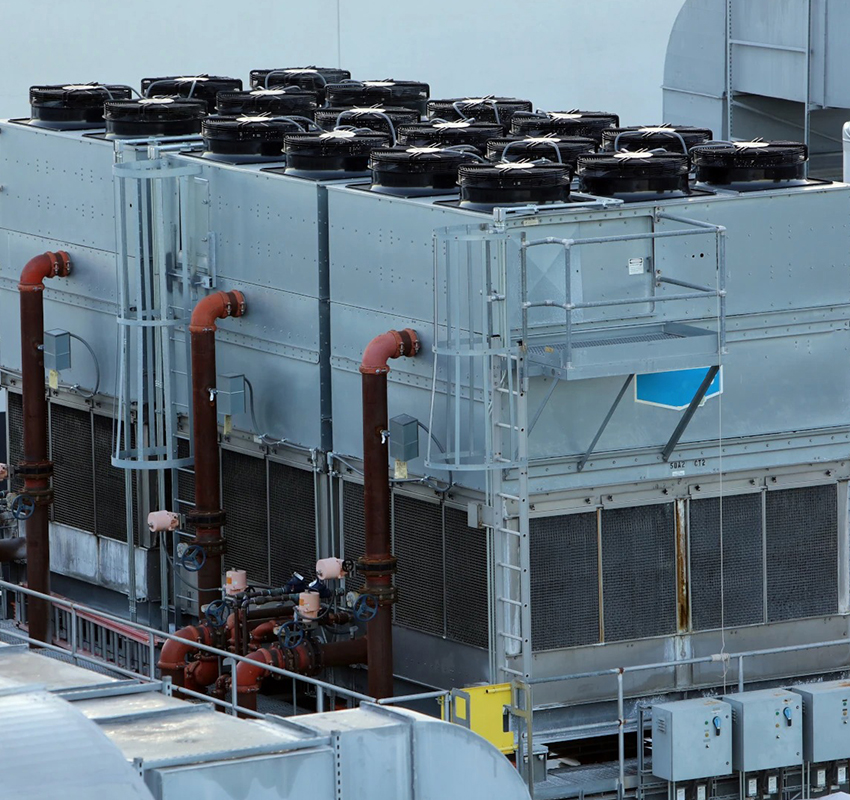
Bolt a warehouse ventilation fan onto a supermarket condenser and it will not live long. Outdoor condenser fans face rain, snow, leaves, agricultural dust and coastal salt spray, plus summer peaks above 40 degC. Evaporator fans work at the other extreme: air at -18 degC or lower, moisture near saturation, frost building on blades, and defrost periods when the coil jumps to plus temperatures while the room stays below zero. A generic indoor fan is not built for that combination.

Refrigeration-grade fans change the engineering. Sealed bearings carry cold-rated grease, the motor winding is protected against condensation and washdown, impellers use corrosion-resistant steel or die-cast aluminium, and housings drain water instead of trapping it. Manufacturers such as Sunon and Sanyo Denki publish bearing and moisture-protection data worth comparing when you specify [7][2]. Figure 4 shows how a refrigeration-duty fan scores against a generic indoor unit across the properties that matter in cold, wet duty.

Ziehl-Abegg Fan for Refrigeration

Figure 4. Refrigeration-duty fans are engineered for conditions a generic indoor fan cannot survive: sealed bearings, protected motors and corrosion-resistant parts.

None of this is exotic; it is the difference between a fan that survives five seasons outdoors and one that seizes in the first winter. Price a replacement condenser fan for the job, not for the catalogue page [4][2].

The Ziehl-Abegg Range for Cold and Frozen Duty

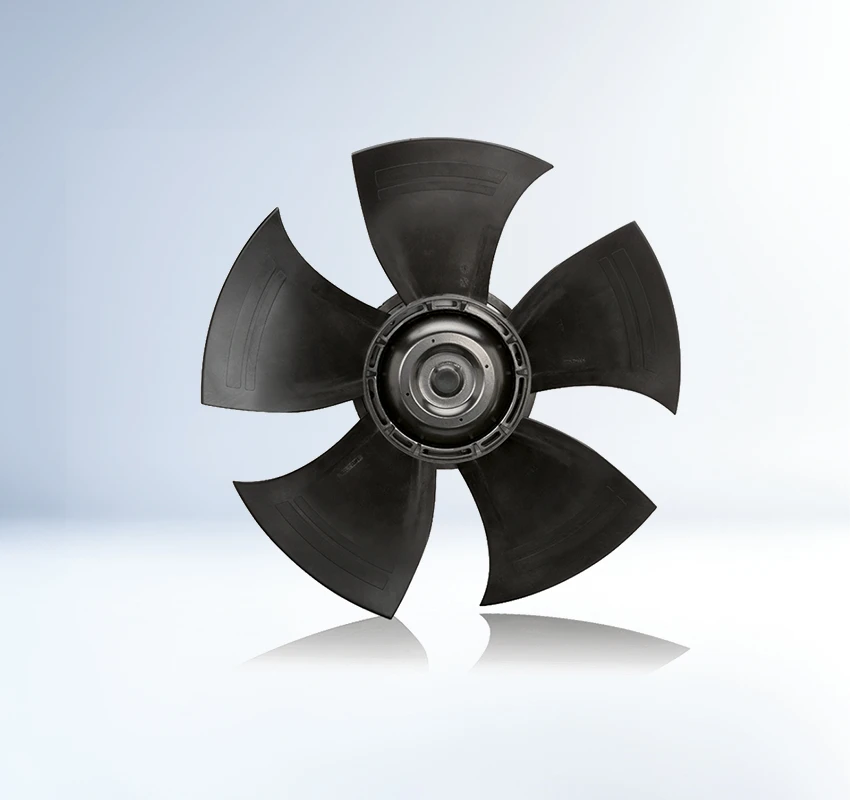
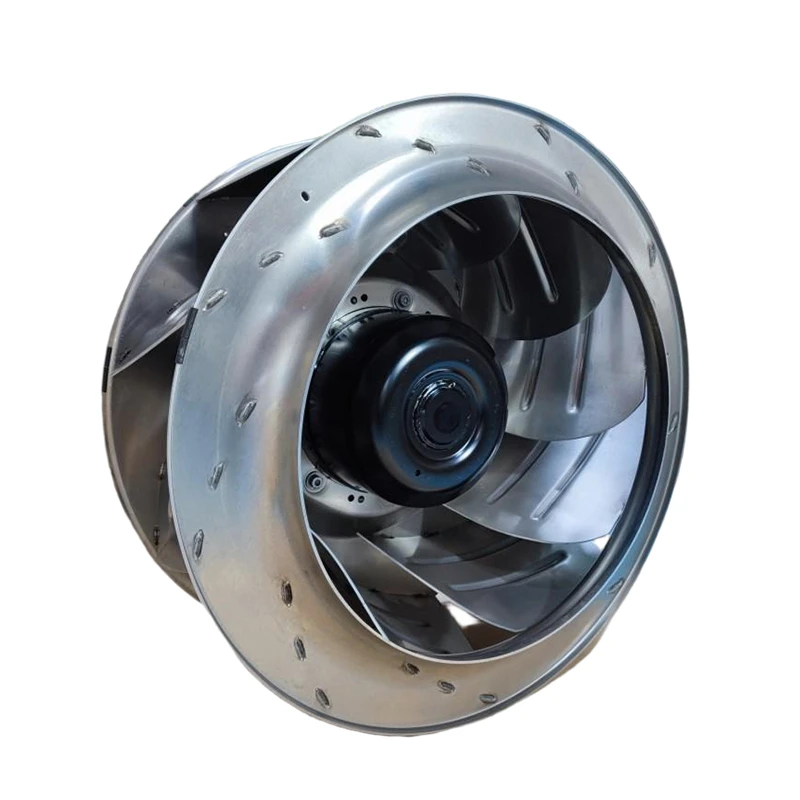
Ziehl-Abegg meets refrigeration with dedicated axial ranges rather than adapted ventilation products. The FB series uses pressed steel blades in an external-rotor AC motor, spans 200 to 630 mm, and is optimised for short nozzles - exactly the mounting found on condensing units and chillers. Blades set to three angles, airflow is bi-directional, and the fans are fully speed controllable. Ziehl-Abegg names cold chain, chiller and industrial refrigeration as the core duty, and offers ATEX explosion-protected versions where flammable refrigerants or vapours may be present [8].

For larger plants the FC series steps up: profiled aluminium die-cast blades, sizes from 315 mm to 1,250 mm, flow up to 62,000 m3/h and static pressure rise to 300 Pa, aimed at full nozzles and duct systems, with two-level dynamic balancing for smooth long-life running [8]. Choosing between FB and FC is mostly about nozzle length and duty; both families use external-rotor motors with the drive in the hub, which keeps them mechanically simple and cheap to service.

There is also a chiller-specific story worth knowing. FE2owlet and FE3owlet fans use biomimetic, owl-inspired blades for quiet operation, and ZAplus ships with corrosion-free composite nozzles that are UV-stable and need no transport packaging. Ziehl-Abegg endurance-tests this equipment outdoors in real conditions for at least two years before series release, and runs service-life tests in severe cold - including tests at 2,970 m altitude - so reliability claims rest on field evidence rather than marketing [8].

Airflow Loss: The Silent Killer of Cold Rooms

The quietest way to waste money in refrigeration is to let condenser airflow decay. Dust packs the fins, blades pick up grime, guards clog with leaves and snow, and the fan keeps spinning as if nothing is wrong. The system may lose a third of its airflow before anyone notices. As airflow falls, condensing temperature climbs; a common rule of thumb in air-cooled refrigeration is that every extra degree of condensing temperature costs roughly 2-3% more compressor energy [6]. Over a condenser that runs all year, that is a substantial annual figure.
What makes this insidious is that rotation is not airflow. A fan can turn at full speed against a blocked coil and move almost nothing; checking only that the blade spins misses the problem. The honest checks are air-side: pressure drop across the coil, current draw against the nameplate, or an airflow reading at the discharge. Figure 5 shows how modest airflow loss near the design point produces disproportionate jumps in condensing temperature [6][5].

Ziehl-Abegg Fan for Refrigeration

Figure 5. Losing condenser airflow pushes condensing temperature up, and every extra degree costs compressor energy.

The cold side suffers the same way from evaporator frost and dirty filters, only the symptom is different: room temperature drifts up, pull-down takes longer, and defrosts multiply. In both cases the repair is cheap and the payoff immediate - cleaning a condenser coil is one of the most cost-effective energy measures in commercial refrigeration [5].

Speed Control: Where the Energy Really Goes

Fan power follows the cube law: halve the speed and the fan draws roughly one eighth of the power. A refrigeration fan rarely needs full speed. Condensers are sized for the hottest day of the year, so through the night, through winter and through shoulder seasons they run far faster than the load requires, and a fixed-speed AC fan burns near-full power in all those hours [6].

Electronically commutated (EC) motors change that. The electronics live in the motor hub, speed responds to a 0-10 V or PWM signal, and the fan modulates with condensing pressure, ambient temperature or room demand. The savings compound: the fan uses less power at reduced speed, and the condenser stays effective so condensing pressure stays low [6]. Figure 3 compares power draw between a standard AC fan and a speed-controlled EC fan as cooling load drops - at 25% load the difference is roughly 88% versus 12% of full-load power. ebm-papst documents the same part-load behaviour across its refrigeration fan range [1].

Ziehl-Abegg Fan for Refrigeration

Figure 6. Speed-controlled EC fans draw a fraction of the power of fixed-speed AC fans at partial load - where refrigeration actually runs.

So if a condenser or evaporator fan runs thousands of hours at part load, speed control pays for the new motor quickly. Two cautions: the electronics inside an EC motor need a sensible operating temperature window, so mounting location matters, and any variable-speed motor needs proper protection and earthing - IEEE motor and variable-frequency standards are the reference to hand to your electrician [3].

Cold Starts, Ice, and Low-Temperature Duty

Evaporator fans in blast freezers run in air that defeats a conventional bearing. At -30 degC and below, grease stiffens, condensation freezes onto blades, and ice changes the balance of the wheel, sending vibration into the bearings and seals. The same fans then survive the defrost cycle, when hot gas heats the coil around them well above freezing - winter and a sauna in the same 24 hours [2][8].

Manufacturers that test in these conditions are worth their weight. Sanyo Denki publishes low-temperature operating data for its ranges, and Ziehl-Abegg runs endurance and service-life tests in severe cold, including the 2,970 m altitude tests mentioned earlier [2][8]. When you specify an evaporator fan, ask for the low-temperature data, not just the catalogue airflow. And keep the defrost and drain design intact: fans interlocked with the defrost schedule, drain heaters working, no running against a heavily iced coil. Underrated or poorly earthed controls are a common source of intermittent failures in cold stores [3].

Noise on Rooftops and Behind Supermarkets

Noise is a selection issue, not an afterthought. Rooftop chiller clusters sit metres from offices and flats, and at full speed an axial fan is loud. The fixes are engineering choices made up front: a larger diameter fan turning more slowly moves the same air with less tip noise; blade profiles designed from biomimetic shapes cut tonal noise; speed control drops the machine to a whisper at night; proper isolation stops vibration travelling down the supports.

Ziehl-Abegg markets its FE2owlet and ZAplus products on this ground, with owl-inspired blade geometry and corrosion-free composite nozzles that also survive years outdoors [8]. For a specifier the point is that quiet refrigeration is a measured outcome: compare sound power at the actual operating point and budget for night setback control rather than accepting a noisier fan at fixed speed. Where units cluster, layout matters more than individual fan noise - staggered placement and one shared speed control strategy prevent complaints better than a slightly quieter blade on one unit [4].

Choosing a Fan for a Retrofit or New Build

Work through the selection in the same order a design engineer would, and most mistakes are caught before money changes hands:

  • Define the duty point. The airflow the fan must deliver against the real static pressure of the coil, nozzle, guard and duct, at the worst-case ambient - not the free-air catalogue figure.
  • Check the extremes. Minimum and maximum air temperature, humidity, altitude, exposure to salt, dust or washdown.
  • Confirm the supply: voltage and frequency, AC or EC, and the control signal available.
  • Set a noise budget before choosing blade size, and check it at the night operating point.
  • Demand certified performance. AMCA-rated air performance data lets you compare fans on the same basis instead of trusting the best-looking free-air number in a brochure [4].
  • Check standards and approvals: motor and protection design per IEEE practice, and regional certifications - VDE, UL, CCC, CE - for export or site requirements [3][8].
  • Plan for service: replaceable external-rotor motors, available blade sets and honest lead times matter more than the last decimal of efficiency when the room is full of product [7].

A fan selected this way is not always the cheapest, but it is the one still running when the cheap one has been replaced twice.

Maintenance That Keeps Fans Running

Refrigeration fans can run every hour of the year, which makes them a maintenance item rather than fit-and-forget. A practical routine: a visual check each month - guards, blades, wiring, obvious frost or dust; coil cleaning at least quarterly, more often near roads, farms or greasy urban air; and a full service once per season, when the coil gets a proper wash, blades are inspected for damage and balance, bearings get a spin test for noise and roughness, and running current is compared with the nameplate [7][4]. Figure 7 shows the same schedule drawn out against the calendar.

Ziehl-Abegg Fan for Refrigeration

Figure 7. A seasonal care schedule for refrigeration fans: monthly checks, quarterly cleaning, and a full service before each peak season.

Three rules keep checks from causing the damage they prevent. Never direct high-pressure washdown at the motor or electrical box - protect the windings, clean the coil, let the fan dry before it runs. Treat bearings as sealed items: for most refrigeration fans, replacement is cheaper and more reliable than relubricating. And log the readings: current, vibration and airflow trend over months, so a rising current with the same airflow points to a blade problem, while falling airflow with the same current points to a coil or guard problem [7][4]. A fan that gets this treatment outlives the compressor it serves - and the compressor is what costs the real money.

Summary

Refrigeration is brutally honest about fans: the ones built for the duty last, the ones bought on price fail at two in the morning. Condenser fans must reject heat through rain, frost, dust and salt; evaporator fans must start on stiff grease in freezing air and survive defrost heat in the same shift. Ziehl-Abegg answers with dedicated ranges - FB and FC axials for nozzles and ducts, FE2owlet and ZAplus for quiet chiller duty - with endurance testing behind the datasheet claims [8].

The operational lessons apply regardless of brand: watch airflow, because rotation is not airflow and lost condenser airflow costs compressor energy; use speed control where part-load runs dominate, because fan power falls with the cube of speed [6]; specify AMCA-rated performance and IEEE-standard protection so the numbers are honest [4][3]; and keep the monthly and seasonal routine, because cleaning and measurement are the cheapest insurance a cold room can buy [4][5].

A well-chosen, well-controlled, well-maintained fan adds years to a refrigeration system and takes the painful surprises out of the energy bill. That is the case for taking fan selection seriously, and it is the reason this guide exists.

FAQ

Q1. Can I just fit a standard axial fan on my cold room condenser?

You can bolt one on, but it will not last. Standard indoor fans are not engineered for outdoor condenser duty - rain, frost, dust, salt spray and steep temperature swings attack the bearings, winding and impeller. Refrigeration-grade external-rotor axial fans with sealed bearings, protected motors and corrosion-resistant blades survive seasons rather than weeks, and a fan failure takes the whole system down. The price difference is small against the cost of the alternative.

Q2. Why choose a Ziehl-Abegg fan over a cheaper AC fan?

Not because of the name on the plate, but because of what is behind it. Ziehl-Abegg documents endurance testing in real outdoor conditions for at least two years, service-life tests in severe cold, export certifications, and a dedicated refrigeration product story (FB, FC, FE2owlet, ZAplus) rather than a general-purpose range stretched to fit [8]. Compare AMCA-rated performance at your duty point and the partial-speed energy of an EC option, and the price difference usually explains itself within a season or two of running hours [4][6].

Q3. Does speed control really save money on a fan that runs 24/7?

Yes - and the fan that runs 24/7 is exactly where it pays. Fan power drops with roughly the cube of speed, so modulating from 100% to 70% speed cuts power to about a third, and to about an eighth at 50%. Most condenser fans only need full speed on the hottest afternoons; the rest of the day they burn power for no useful reason. Behind the fan, lower condensing pressure saves compressor energy as well, which is often the bigger number [6].

Q4. What happens if the condenser fan stops working?

Heat stops leaving the condenser, so condensing pressure climbs steadily. The compressor either trips on its high-pressure safety or runs inefficiently and dangerously hot; without protection, that overheats and destroys the compressor. Cooling capacity falls as the room temperature drifts up. Most hard-fault shutdowns in air-cooled refrigeration trace back to a dirty or failed fan, which is why monitoring the fan fault signal and airflow matters [5][6].

Q5. How often should I clean a refrigeration condenser fan and coil?

It depends on the location. Heavy duty in dusty, greasy or agricultural settings can demand monthly attention; light residential duty can go twice a year. Do a visual check monthly, clean whenever the fins show visible dust or airflow has dropped noticeably, and commit to at least one full seasonal service including a coil wash, blade inspection, bearing spin test and current check. Never blast water at the motor - protect the windings and the electrical box [7][4].

References

[1] ebm-papst - EC fans and refrigeration application guides - https://www.ebm-papst.com.cn/en/
[2] Sanyo Denki - Fan technology and environmental data - https://products.sanyodenki.com/en/sanace/
[3] IEEE - Motor and variable-speed drive standards - https://standards.ieee.org/
[4] AMCA International - Certified fan performance ratings - https://amca.org/
[5] ASHRAE - Refrigeration and HVAC design guidance - https://www.ashrae.org/
[6] U.S. Department of Energy - Motor systems efficiency - https://www.energy.gov/eere/amo/motor-systems
[7] Sunon - Sealed and IP-rated fan engineering - https://www.sunon.com/en/
[8] Ziehl-Abegg - Axial fans for refrigeration and chillers - https://www.ziehl-abegg.com/en/

Zhang Yu AUTHOR
Senior HVAC & EC Fan Applications Engineer
on EC and DC fan engineering, AC-to-EC energy retrofits, AHU modernization and data center cooling. Every article is grounded in real fan data, manufacturer documentation and completed retrofit projects.
View all articles by Zhang Yu →