1.Why a Single dB(A) Number Is Never the Whole Story
Ask for the noise level of a fan and you usually get one number: 68 dB(A), say. That figure is only useful if you know the conditions behind it - the airflow, the speed, the nozzle arrangement and the test standard. Fan noise is not a property of the fan alone; it is a property of the fan running at a particular operating point, and systems rarely operate at a single point [8][4].
Take Ziehl-Abegg as an example. The range runs from compact low-pressure axials to medium-pressure machines up to 1,400 mm in diameter moving over 140,000 m3/h, and the noise data for those two extremes is published for specific sizes, speeds and airflow values, not as one magic number [8]. Treat a single datasheet figure as a starting point, not an answer.
The reason this matters is practical. Plant rooms sit next to offices, chillers live on roofs, heat pumps hang beside bedrooms. Most noise problems in mechanical services are discovered after installation, when the cost of fixing them is already real money. ASHRAE's acoustics guidance exists because H&V engineers keep making the same mistakes: reading the wrong number off the wrong column, or scaling a single figure to the wrong operating condition [5].
2.Sound Power, Sound Pressure and dB(A)
Two different quantities travel under the name "noise level." Sound power (Lw) is what the fan radiates - a property of the fan, measured in a ducted test rig and expressed as a sound power level in dB. Sound pressure (Lp) is what a microphone - or an ear - actually receives, and it depends on distance, reflections and the environment. Confusing the two is the most common error in fan noise engineering [4].
Then come the weighting. dB(A) applies a filter that approximates human hearing, reducing the emphasis on low frequencies. It summarises the whole spectrum in one number, which makes it convenient and deeply insufficient at the same time: a fan with a strong tonal peak can measure the same dB(A) as one that is broadband and smooth, yet the tonal one will be reported as far more annoying. For tonal noise - blade-pass frequency humps - you need the octave band data [4][3]. Figure 1 shows how the pieces fit together.
.png)
Figure 1. Sound power belongs to the fan; sound pressure belongs to the listener. Octave band data sits behind the single dB(A) number, and every value needs its test conditions.
Measurement standards keep the numbers honest. Ducted sound power is measured to methods such as AMCA 300 or the equivalent ISO family, with the fan at a defined operating point in a defined ductwork configuration. When a vendor says "noise data," ask which standard produced it before you compare anything [4].
3. What Ziehl-Abegg Actually Publishes
Ziehl-Abegg publishes noise data in two main places. The technical datasheets list performance and acoustic values for each size and motor option - airflow, pressure, speed, power and sound data together, so you can read the noise at the operating point you care about. The FANselect selection program goes further: it calculates a complete operating point from your airflow and pressure requirements and returns the corresponding acoustic data along with speed and power, all on the same basis [8].
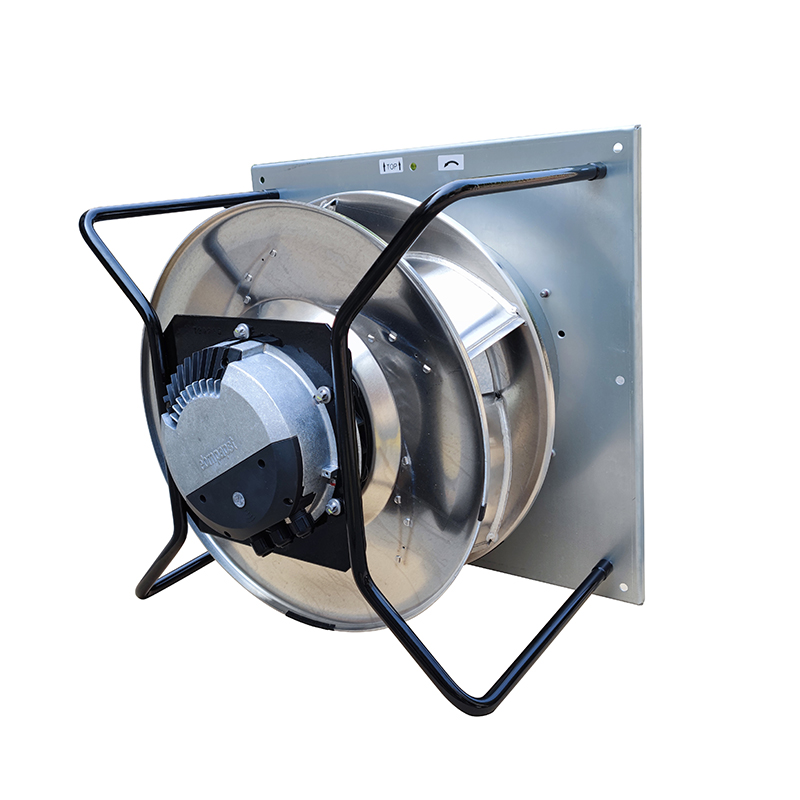
The product story behind the numbers is worth knowing too. The MAXventowlet medium-pressure axial series - sizes 315 to 1,400 mm, airflow up to 144,500 m3/h and pressure to 2,200 Pa - uses biomimetic blade profiles and claims a noise improvement of up to 12 dBA over the previous generation, with lightweight corrosion-free ZAmid composite blades. The FPowlet is marketed as the most silent axial fan for heat pumps, and the ZAplus Next Generation line is built around the same quiet, biomimetic standard. Each of these claims sits behind a set of curves, not a single headline number [8]. The ECblue drives follow the same discipline, and the acoustic documentation across the wider EC fan industry - ebm-papst's included - is built on the same duty-point-based format, so the reading rules in this guide carry over whichever vendor you compare [1].
That last point deserves emphasis. "Up to 12 dBA better" is a range highlight across a family, not a promise for every model at every speed. The disciplined way to use vendor data is to pull the actual curve for the actual model at the actual operating conditions - which is exactly what FANselect forces you to do [8].
4. Speed, Blade Shape and the Shape of the Spectrum
Look at a fan's spectrum in octave bands and the story divides in two: broadband aerodynamic noise from turbulence, and tonal noise at the blade-pass frequency and its harmonics. Tonal peaks are what people describe as "whine" or "howl," and they carry more annoyance than the same dB(A) in smooth broadband. Figure 2 shows a standard blade profile with a clear tonal hump next to a biomimetic blade profile with the peak flattened - the same single-number level on paper, different neighbours' experience in practice.
.png)
Figure 2. Biomimetic blade profiles flatten the tonal hump at the blade-pass frequency - the difference between a smooth fan and a whining one.
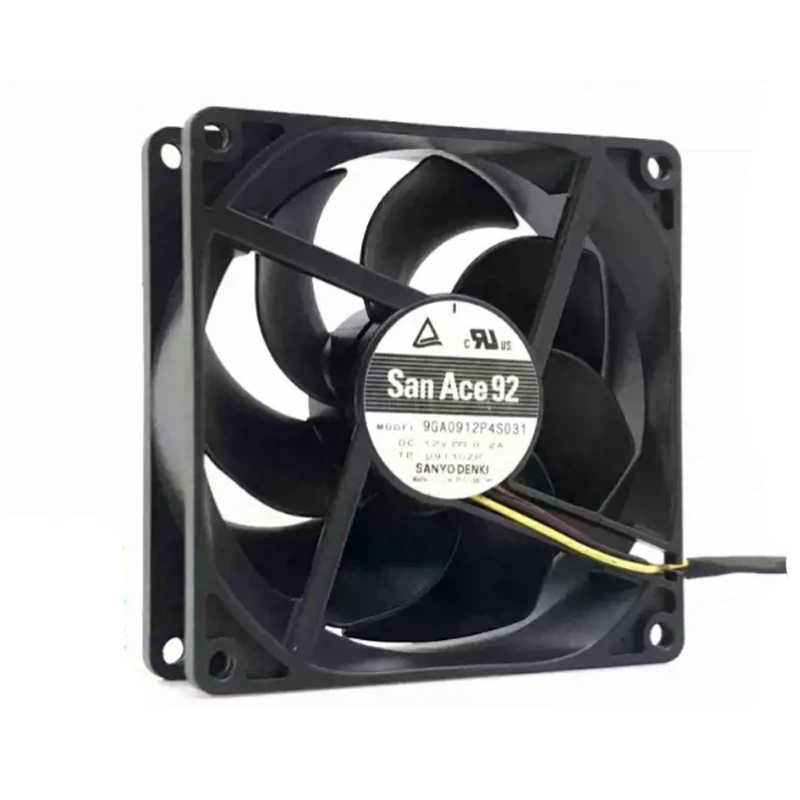
Blade design is where fans earn their acoustic difference. Ziehl-Abegg's bionic development copies natural shapes - owl-inspired edges that suppress vortex shedding - to reduce exactly these tonal components, which is why the MAXventowlet claims the 12 dBA step and the FPowlet is positioned for bedroom-adjacent duty [8]. Light, stiff composite blades also change how the wheel reacts to vibration, and balanced wheels are quieter wheels: two-plane dynamic balancing keeps the mechanical noise floor low where standard production would leave it higher [8][7]. Motor and bearing quality land in the same spectrum - smaller-frame makers such as Sanyo Denki publish environmental noise data that shows exactly how the motor side of a fan contributes to what the datasheet reports [2].
5. Reading the Data at Your Operating Point
Noise rises with airflow, but not at a constant rate, so the duty point dictates the truth. Figure 4 compares a standard blade set with an optimised one across the airflow range: at some airflows the gap is small, at the design airflow it can be the difference between passing and failing a site noise budget. Read the curve at the airflow you actually need, within the resistance of your system - free-air numbers are for marketing, not design [4][8].
.png)
Figure 4. Noise data only means something at the airflow you actually need - compare blade options at the duty point, not at free air.
Then add the system effects. A nozzle, a guard, a bend close upstream or a duct discharging into a walled corner all add aerodynamic noise, and none of it appears on the fan datasheet. AMCA publishes the rating methods and ASHRAE the application guidance precisely because the installed fan is always a little louder than the test-rig fan; a sensible margin - a few dB - is part of honest selection [4][5].
That margin is also why the optimised-blade choice is worth making even when the duty point looks comfortable. System effects eat margin without ever asking permission; the fan that starts with headroom keeps it [5].
6. From Data to Site: Distance, Reflections and Arrays
Sound pressure at a neighbour's window is a different calculation from the fan's radiated power. In free field, spherical spreading knocks roughly 6 dB off the level for every doubling of distance. Reflections from walls, parapets and adjacent units add energy back, while screening barriers and distance do the removing. Simple point-source calculators give a first estimate; anything heading toward a permit or a complaint goes to a qualified acoustician [5].
Multiple fans change the arithmetic too. Roughly incoherent sources add on a logarithmic basis: two identical fans side by side add about 3 dB compared with one - three add roughly 4.8 dB. Planning an array of eight roof units as "eight times one fan" is exactly the mistake that produces unhappy neighbours. The array also changes the spectrum at the receiver, because each unit radiates from a slightly different position, so what you measured at one unit is not what you will hear outside the fence [5].
Time of day matters as much as level. Night-time limits are typically 10 dB or more below daytime ones, which is why residential-adjacent equipment ends up running a night setback regime - and why the noise data at reduced speed is often the data that actually matters [5].
7. The Regulatory and Rating Framework
Fan noise data sits inside a framework that decides how trustworthy it is. In Europe, the Ecodesign (ErP) regulations set efficiency requirements for fans and demand that claimed performance be verifiable under defined test standards. On the acoustic side, AMCA operates certified sound performance programmes built on measurement methods such as AMCA 300 and 311; AMCA-certified data is audited, comparable and licensed for use - which is what "rated" means in practice [4].
The measurement itself is a discipline: calibrated instrumentation, repeatable set-ups and defined environmental conditions, with IEEE and ISO documentation providing the underlying instrumentation conventions. A datasheet figure without a test standard is an opinion; a figure with one is a specification [3][4].
So when a selection comes down to two vendors, compare certified sound power data at the same operating point under the same rating method - not brochure dB(A) numbers. Ask for the octave band table and, if the duty is sensitive, the test report. Vendors that publish the full data are the ones you can defend in front of a client [4].
8. Speed Control: The Cheapest Noise Reduction
The single most useful relation in fan noise is the speed law: moving from rpm1 to rpm2 changes the level by roughly 50*log10(rpm2/rpm1) dB. Slow the fan 10% and it is about 2 dB quieter; halve the speed and you take roughly 15 dB off the level. Figure 3 shows the shape of that curve against typical axial data points - the quietest hours of the day are the ones where the fan goes slowest [6].
.png)
Figure 3. Noise follows roughly 50*log10 of the speed ratio: slower is quieter, and slower is cheaper - the same lever works for both.
The same knob that quiets the fan also saves its energy, because fan power falls with the cube of speed. The U.S. Department of Energy's motor-systems guidance has made variable-speed operation the default recommendation for fans with part-load hours, and EC technology - Ziehl-Abegg builds its ECblue range around it - delivers both effects together: 40% less speed at night, a few dB quieter outside, and a running cost that drops with it [6][8].
Two cautions. First, never compensate for an undersized fan by pushing it faster than the design speed - noise climbs steeply and components suffer. Second, speed control needs real control logic: night setback on a schedule, or demand-based modulation from pressure or temperature sensors, not a permanent 90% setting that quietly raises fan temperatures and reduces lifetime [6][8].
9. A Specifier's Workflow for Noise Data
Here is a sequence that fits most selections, summarised in Figure 5. Define the duty point first: the airflow the fan must deliver against the real system resistance at the worst-case condition. Pull the acoustic data for that point - from the datasheet or FANselect - and write down the operating speed and the test standard alongside the dB value. Convert the sound power to a predicted sound pressure at the critical receiver, with distance, reflections and array effects. Compare with the day and night budget, and leave a margin [4][8].
.png)
Figure 5. From duty point to decision: pull the data, convert to the receiver, compare with the budget, then choose the hardware and controls.
Only then choose the hardware: the blade profile with the best level at the duty airflow, the size that runs at a comfortable speed, and EC control where night operation is part of the picture. If the margin is thin, plan a silencer, screening or repositioning before the order - not after the complaint. Record the operating conditions in the commissioning documents, because the person who inherits the fan will need to know which conditions the noise figure belongs to [5][8].
10. Summary
Fan noise data earns its keep only in context: sound power rather than sound pressure, dB(A) backed by octave band data, and every figure tied to a defined operating point and test standard. Ziehl-Abegg publishes acoustic data alongside duty conditions in its datasheets and FANselect, and its biomimetic blade development - MAXventowlet, FPowlet and the ZAplus generation - exists precisely because the spectrum, not just the level, decides what people hear [8].
The design rules are stable. Read the curve at the real duty point and add margin for system effects [4][5]. Convert honestly from data to site, account for arrays and night budgets [5]. Prefer AMCA-certified sound ratings and documented standards [4][3]. And use speed control as both a noise and an energy lever, because the cube law and the speed law work in the same direction [6].
Done this way, noise data stops being a column to copy into a schedule and becomes the tool that keeps the fan out of the complaint meeting in the first place.
11. FAQ
Q1. Where can I find Ziehl-Abegg fan noise data?
Two official places. The technical datasheet for each fan size lists acoustic values together with airflow, pressure, speed and power, so the noise is tied to an operating point. FANselect, Ziehl-Abegg's free selection program, calculates the operating point from your airflow and pressure and returns the corresponding sound data automatically. For anything beyond the catalogue, the vendor's technical support can supply the full test report [8].
Q2. What does dB(A) mean, and why is it not enough?
dB(A) is a single number that summarises the whole noise spectrum using a filter that approximates human hearing, de-emphasising low frequencies. It is not enough on its own because it hides the distribution: a fan with a strong tonal peak at the blade-pass frequency can have the same dB(A) as a smooth broadband fan yet sound far more annoying. For serious selections you also need the octave band table and, wherever possible, AMCA-certified sound power data [4].
Q3. How much quieter are Ziehl-Abegg's biomimetic fans?
The MAXventowlet axial series claims a noise improvement of up to 12 dBA over the previous generation thanks to its biomimetic blade design, and the FPowlet is positioned as the quietest axial for heat pump duty, with the ZAplus Next Generation built to the same standard [8]. But "up to" is the operative phrase: the actual difference depends on the model, the speed and the operating point, so check the curve for your specific fan rather than the family headline.
Q4. How much does fan noise drop when I slow the fan down?
Approximately 50*log10(rpm2/rpm1) dB: about 2 dB for a 10% speed reduction, roughly 7 dB at 70% speed and roughly 15 dB at half speed. The same speed change cuts fan power with the cube law, so slowing a fan at night is both quieter and cheaper - which is why night setback and demand-based EC control are standard advice for residential-adjacent equipment [6].
Q5. My new fan sounds louder than the datasheet said - why?
Usually one of five things: the fan is running at a different operating point from the datasheet condition (more airflow or a different speed); the installation adds system effect noise from nozzles, guards or bends; the measurement includes distance, reflections or an enclosure that differs from the test rig; several fans are running and adding together; or the datasheet figure is sound power while the site reading is sound pressure. Re-check the conditions against the test standard, then look at the system, not just the fan [4][5].
12. References
[1] ebm-papst - EC fan technology and acoustic data practice - https://www.ebm-papst.com.cn/en/
[2] Sanyo Denki - Environmental and noise data for fan motors - https://products.sanyodenki.com/en/sanace/
[3] IEEE - Measurement, instrumentation and data standards - https://standards.ieee.org/
[4] AMCA International - Certified sound ratings for fans - https://amca.org/
[5] ASHRAE - HVAC acoustics and sound level design guidance - https://www.ashrae.org/
[6] U.S. Department of Energy - Motor systems efficiency and speed control - https://www.energy.gov/eere/amo/motor-systems
[7] Sunon - Bearing and motor noise engineering - https://www.sunon.com/en/
[8] Ziehl-Abegg - Fan noise data, FANselect and biomimetic ranges - https://www.ziehl-abegg.com/en/