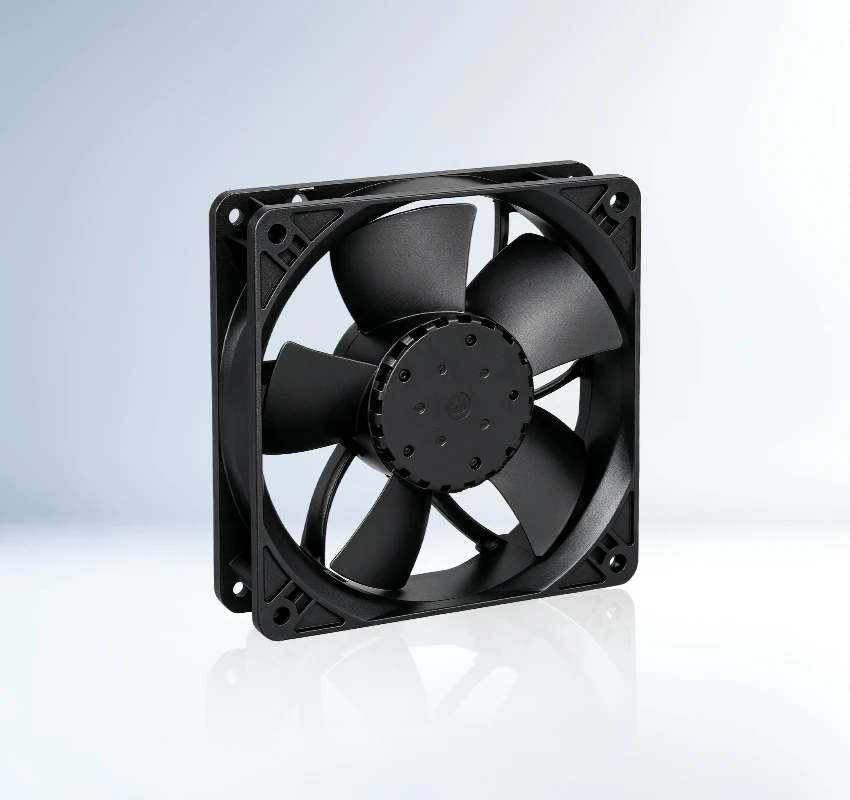
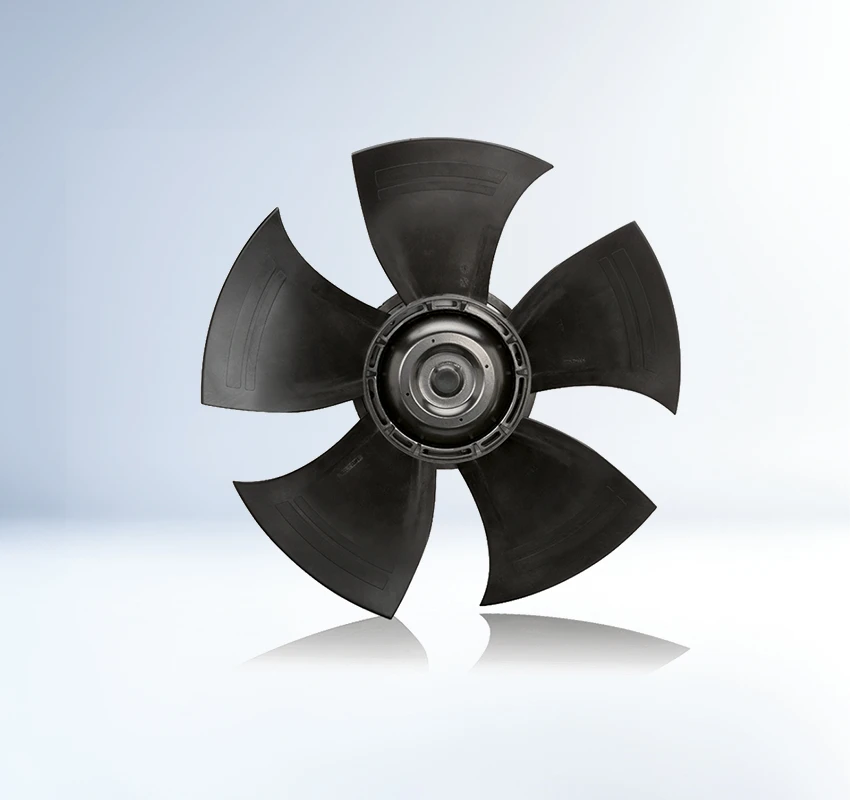
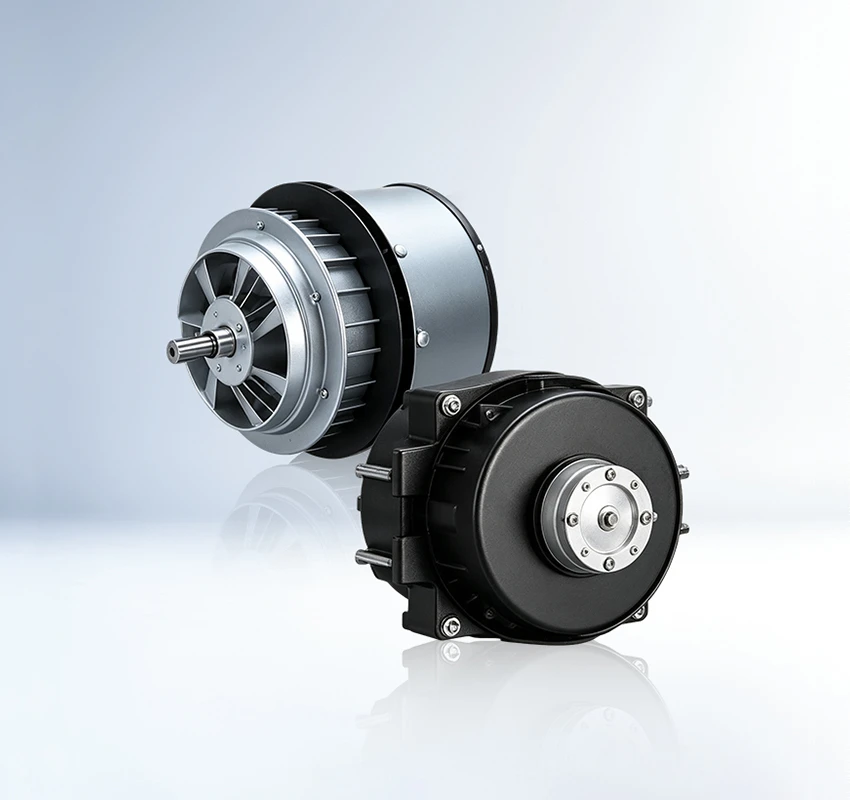
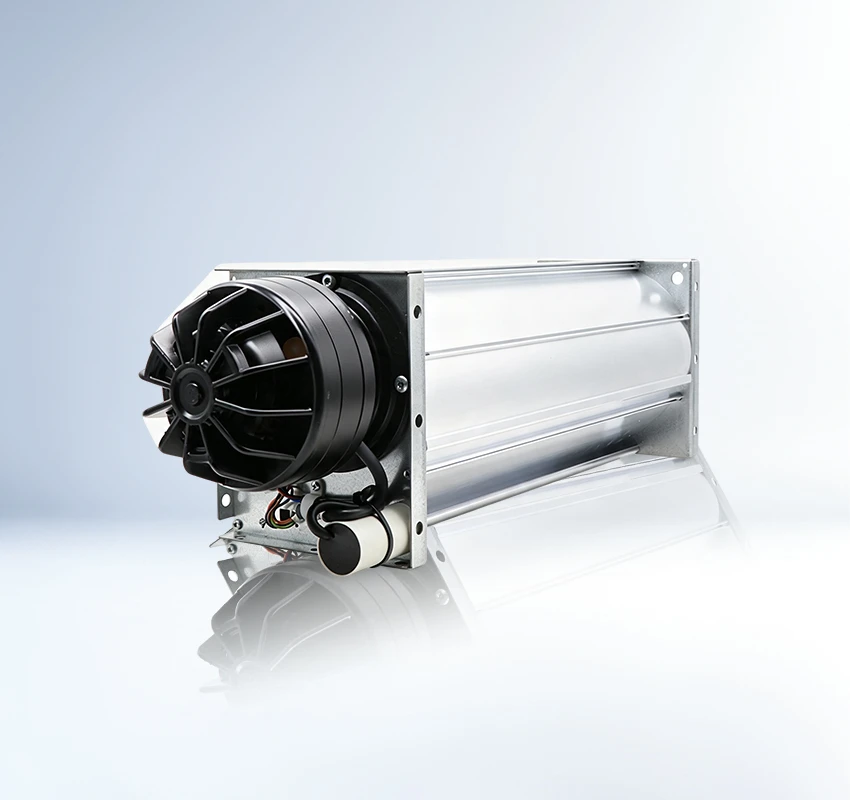
TWR230P59H-2-6 is a 220 VAC axial fan for servers, data-communications equipment, control cabinets. Its main supplied feature is axial airflow intended for low-to-moderate system resistance. It also lists 160 W input power for the listed electrical version. Review performance curve for ductwork design.
| Rated Voltage(V) | 220 |
|---|---|
| Input Power(W) | 160 |
Installation makers serving data centers and communication installation can integrate ROYAL TWR230P59H-2-6 as an AC axial fan for directed ventilation and component-level heat removal.
The fan can enable robust service when its duty point is checked against the complete unit curve and thermal load.
Its axial-flow arrangement carries a relatively large air volume along the motor axis, making it suitable for low-to-moderate unit resistance.
The listed 220 V supply and 160 W input give electrical designers a defined basis for power and interface planning. Confirm the exact operating point before production release. Preserve the specified air delivery direction during assembly. Review the approved electrical interface for the complete suffix.
For installation in servers and data-communication hardware, ROYAL TWR230P59H-2-6 acts as a thermal control component that cools computing and network assemblies. Forced-air thermal control supports installation availability during long duty cycles and repeated load changes.
For machinery in power supplies, inverters and control cabinets, ROYAL TWR230P59H-2-6 acts as a thermal management component that cools power modules and controls. Consistent thermal management reduces thermal stress around assemblies that cycle between standby and high-load operation.
Within industrial automation machinery, TWR230P59H-2-6 ventilates drives and production electronics as a ROYAL AC axial fan. This gives machinery makers a practical thermal management element that aids equipment platform reliability without changing the stated industry direction.
For application in medical and laboratory instruments, ROYAL TWR230P59H-2-6 acts as a forced-air cooling component that cools enclosed instrument electronics. Maintaining clear inlet and outlet space helps the integrated application realize the expected forced-air cooling benefit.
The upload sheet marks the item as In Stock, but available quantity should be confirmed when the order is placed.
The upload row lists 220 VAC. Confirm phase, frequency, terminals, and local supply conditions before wiring.
Check supply voltage, controller signals, blocked airflow, contamination, abnormal noise, rotation, and the equipment operating point before replacing the unit.
No model-specific maintenance interval is supplied. Keep the airflow path clean, inspect mounting and electrical connections, and follow the exact product instructions.
Its advantage should be judged from the matched series feature, exact size, electrical rating, and available performance data rather than from a generic fan comparison.
It may be evaluated for high-reliability cooling using the supplied parameters, but duty cycle, redundancy, ambient limits, and protection must be confirmed at system level.