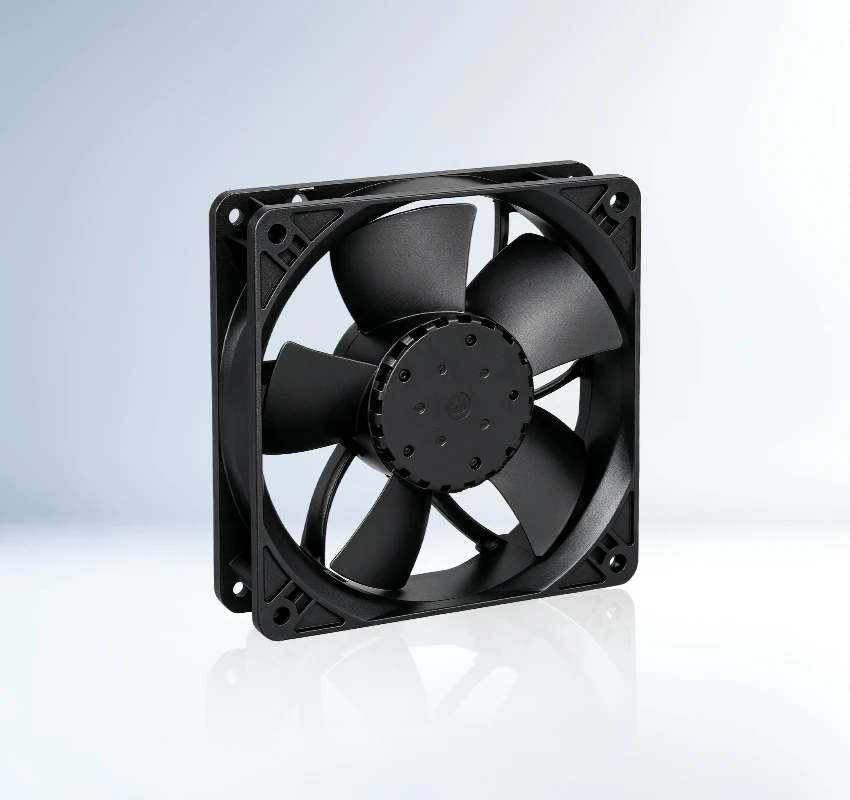
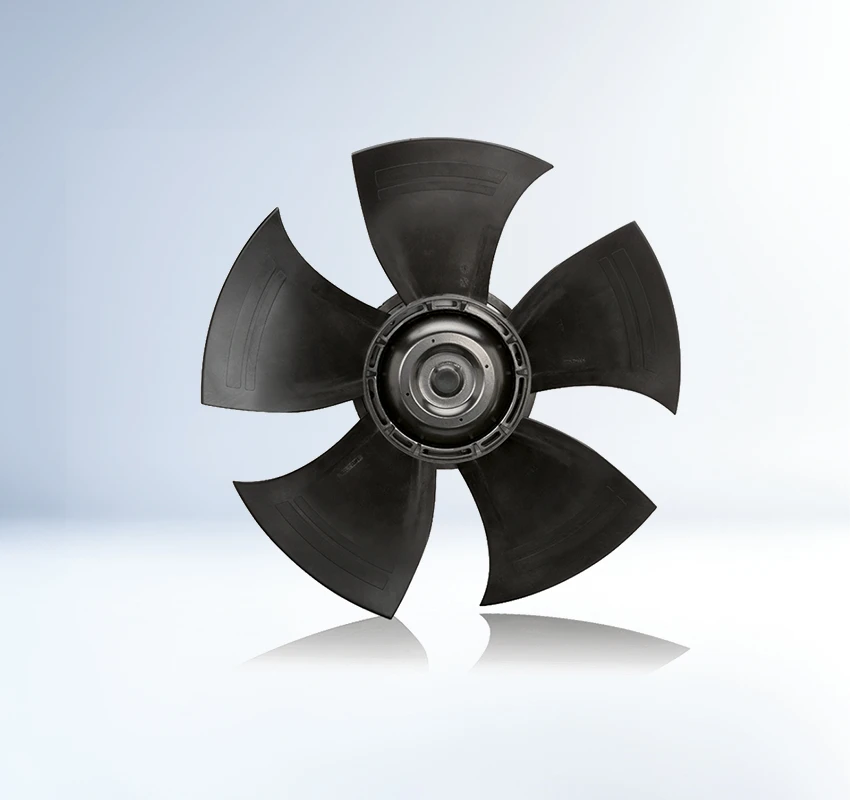
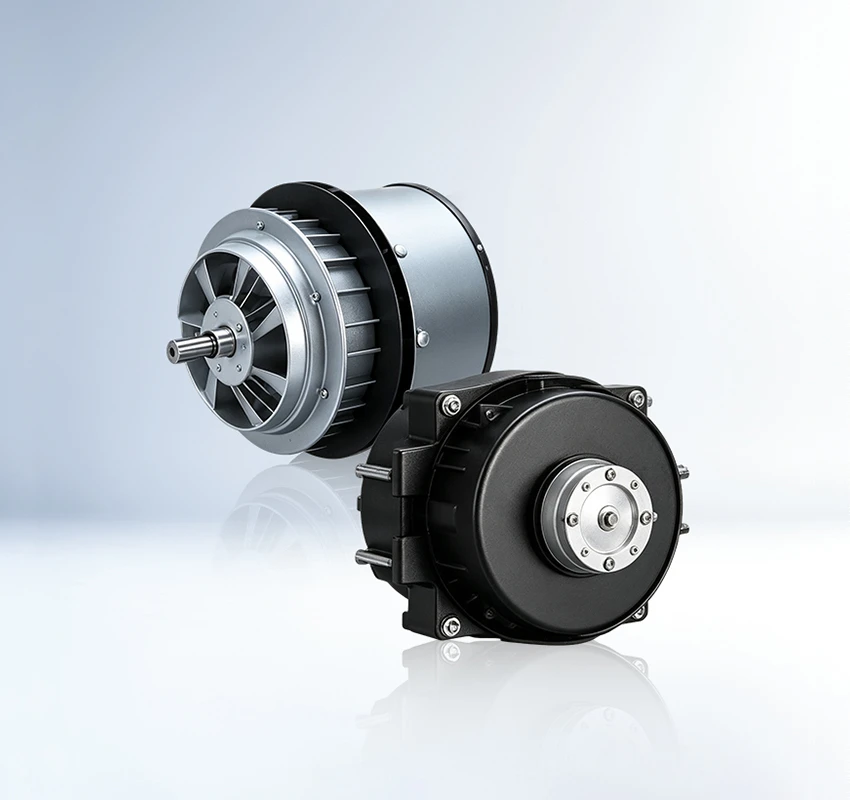
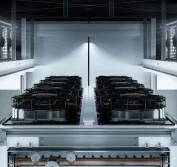
DRAD249-4L is a 400 VAC axial fan for data-communications equipment, heat pumps, ventilation systems. Its main supplied feature is 4300 m³/h maximum airflow stated for this model. It also lists 1080 W input power for the listed electrical version. Review ventilation duty for motor selection.
| Rated Voltage(V) | 400 |
|---|---|
| Max.Air Flow(m³/h) | 4300 |
| Input Power(W) | 1080 |
| Speed(rpm) | 1140 |
The DRAD249-4L brings Rosenberg AC axial fan performance to air-handling, HVAC and refrigeration assembly. It gives system developers a defined component for forced-air thermal management.
Its axial-flow arrangement carries a relatively large air volume along the motor axis, making it suitable for low-to-moderate system resistance.
For procurement teams, retaining the full model code enables controlled sourcing, compatible replacement and clearer maintenance records.
The listed ventilation flow of 4300 m3/h remains subject to the resistance and recirculation of the production installation. Review the approved electrical interface for the complete suffix. Validate sound and temperature in the finished enclosure.
The Rosenberg AC axial fan DRAD249-4L addresses thermal demand in HVAC and ventilation systems by helping to provides supply or exhaust airflow. The selection supports a clearer bill of materials and reduces uncertainty when replacement parts are required.
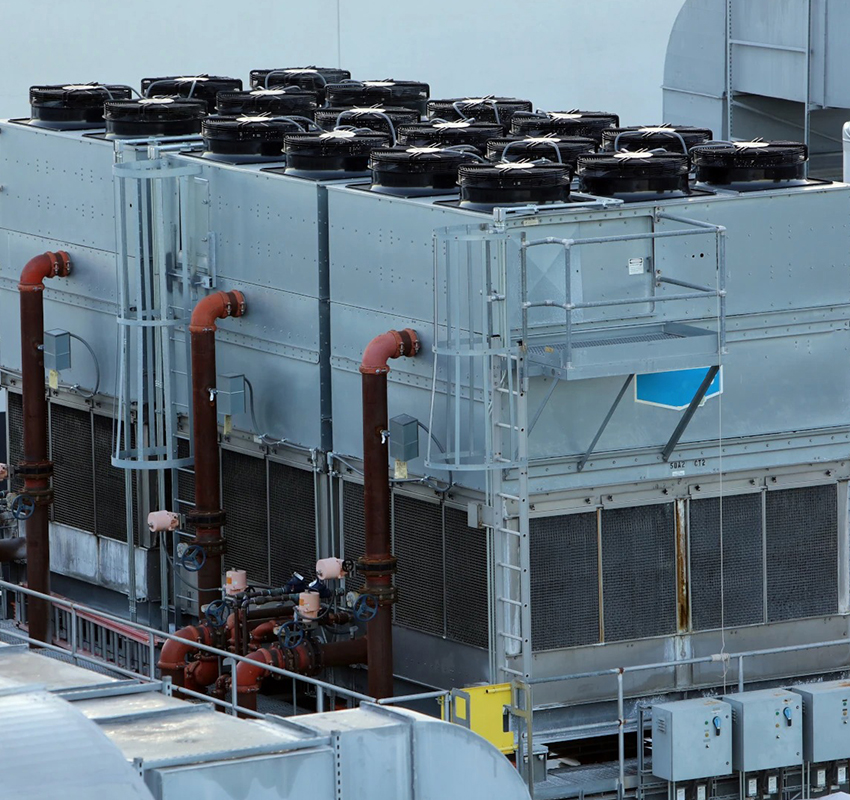
Hardware serving refrigeration and condenser hardware can integrate Rosenberg DRAD249-4L; the unit moves air across refrigeration coils. The result enables dependable running while keeping the forced-air cooling function understandable for future service work.
The application of DRAD249-4L covers heat exchangers; here, the AC axial fan moves air across transfer surfaces. Engineers should verify mounting, temperature management flow direction and installation resistance to preserve the intended application value.
Applied to heat-pump systems, Rosenberg model DRAD249-4L moves air through exchange sections. The final air delivery path should remain clear during installation and routine maintenance. This provides B2B buyers with a model-specific basis for engineering approval, purchasing and maintenance.
No exact IP protection level is stated for this item in the supplied sources. Confirm it before use in dusty, wet, or harsh locations.
Speed-control support is not stated for this exact item in the supplied sources. Confirm the motor and controller version before specifying control hardware.
No guaranteed lead time is provided in the supplied sources. Confirm current stock, required quantity, production schedule, and shipping date with the supplier.
The supplied row lists 4300 m³/h airflow, 1080 W input, 1140 rpm. Compare these values with the real system operating point, not only the free-air rating.
Compare the full model suffix, voltage, size, motor or controller type, mounting, airflow, pressure, power, speed, and protection; do not copy data from a similar model.
Available performance data includes 4300 m³/h airflow, 1080 W input, 1140 rpm. Obtain the full curve when system resistance or part-load behavior matters.

DRAD315-4S is a 690 VAC axial fan for data-communications equipment, heat pumps, ventilation systems. Its main supplied feature is 1355 rpm rated speed in the supplied parameter row. It also lists a 315 mm size specified in the upload data. Review installation clearance for ductwork design.
Read More
DRAD279-4S is a 400 VAC axial fan for data-communications equipment, heat pumps, ventilation systems. Its main supplied feature is 5900 m³/h maximum airflow stated for this model. It also lists a 280 mm size specified in the upload data. Review housing geometry for air-system design. Check the exact variant before ordering.
Read More
DRAD224-4B is a 230 VAC axial fan for data-communications equipment, heat pumps, ventilation systems. Its main supplied feature is 3500 m³/h maximum airflow stated for this model. It also lists 390 Pa maximum pressure stated for this model. Review airflow path for noise assessment. Check the exact variant before ordering.
Read More