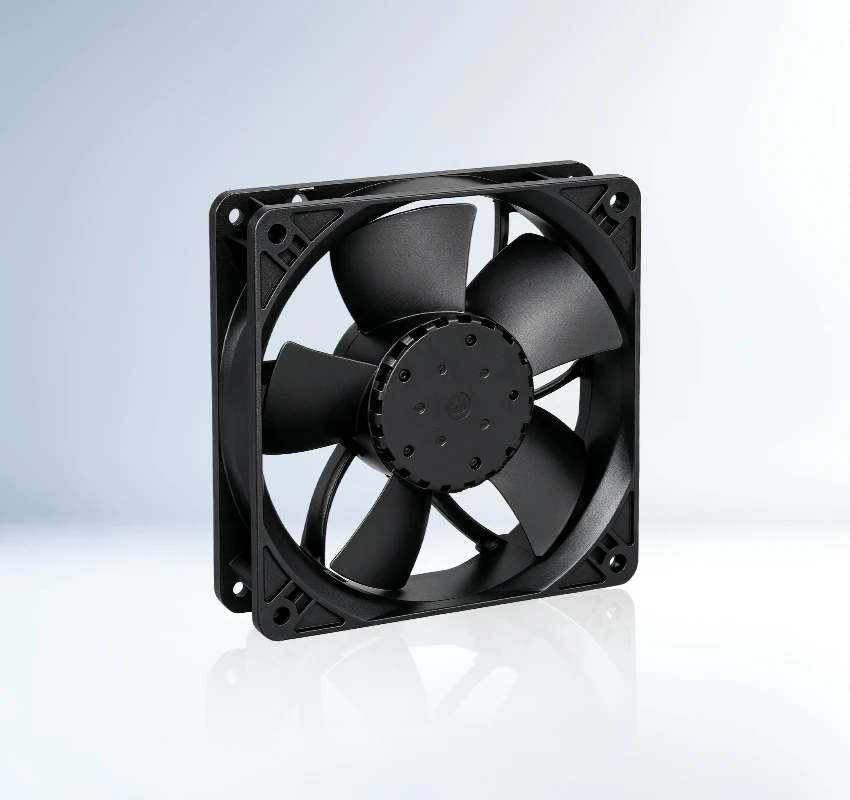
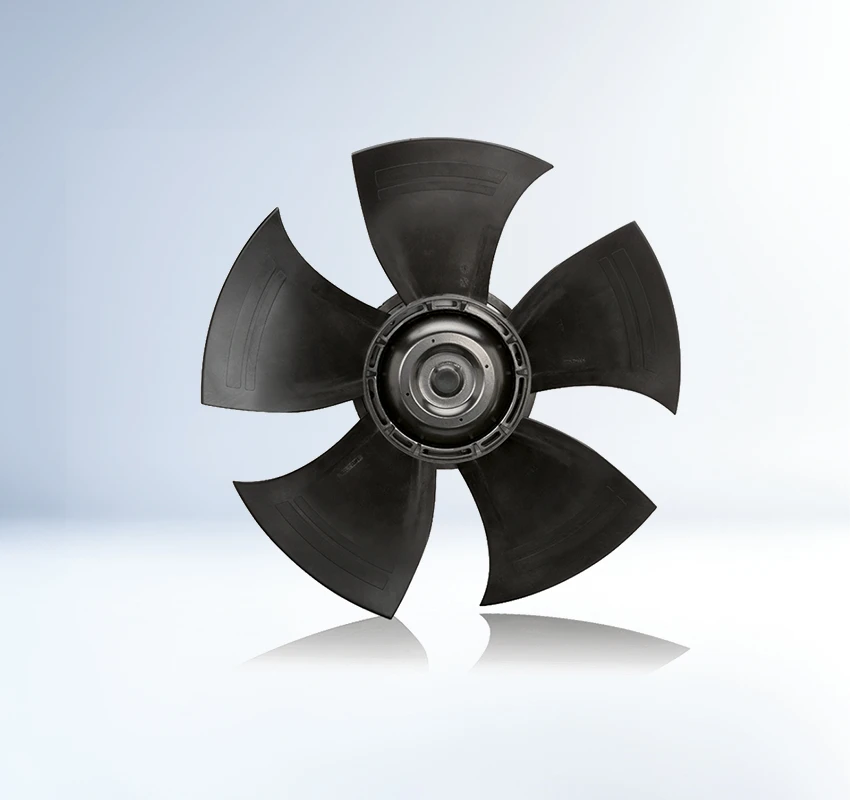
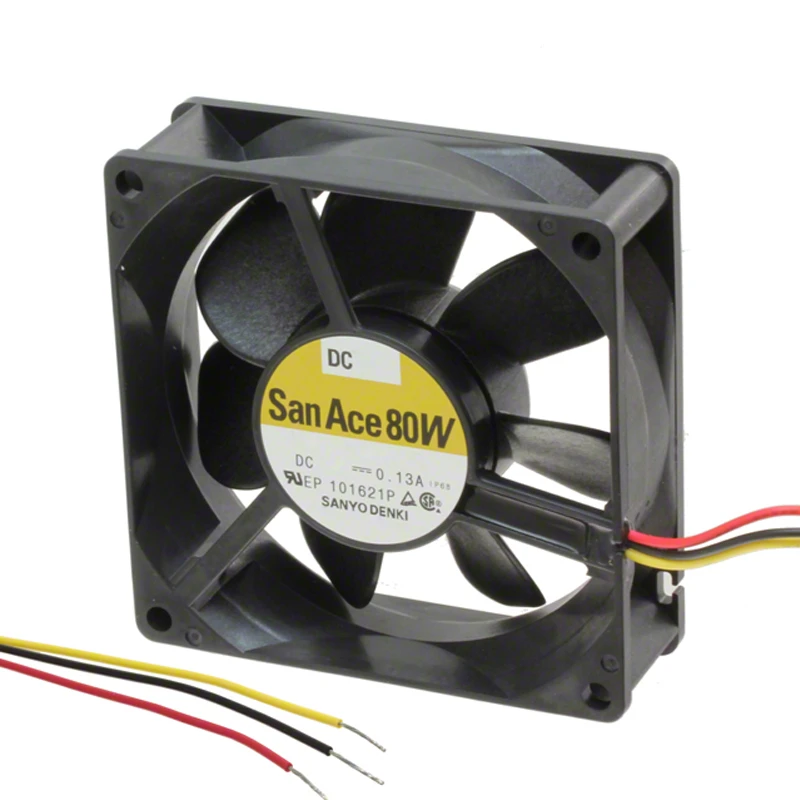
Sanyo Denki 109R0824L401 is a 24 VDC DC axial fan in a 80 × 80 × 25 mm format for servers, UPS systems, and telecom equipment. Series focus: high airflow and pressure. 14.7 Pa maximum pressure is the most distinctive duty-point parameter. Check mounting geometry validation system interface. Focus: mounting geometry validation system interface.
| Rated Voltage(V) | 24 |
|---|---|
| Size(mm) | 80*80*25 |
| Max.Air Flow(m³/h) | 38.6 |
| Max.Pressure(Pa) | 14.7 |
| Speed(rpm) | 1850 |
| Noise(db) | 20 |
The San Ace 109R0824L401 serves servers, storage systems and ICT equipment as a DC axial fan. Its airflow supports heat transfer from internal devices toward cabinet or chassis exhaust openings.
The rated peak airflow of 38.6 m3/h combines with 14.7 Pa pressure capability to support useful flow after installation losses are considered. Buyers should confirm the complete suffix, connector, sensor output and control option before ordering. Engineers should validate the operating point with the actual grille and filter.
Check startup demand against the power supply. The check aligns mechanical fit with cooling duty. Confirm the final fan curve in the assembled equipment. Preserve clear inlet and outlet space during installation.
For server chassis and computing nodes, 109R0824L401 provides a dedicated forced-air cooling path. Directed airflow carries component heat toward the equipment exhaust and helps maintain a controlled internal temperature. It supports reliable OEM equipment cooling.
SANYO DENKI 109R0824L401 serves storage arrays and data appliances that operate with sustained internal heat. Directed airflow carries component heat toward the equipment exhaust and helps maintain a controlled internal temperature. It supports reliable OEM equipment cooling.
109R0824L401 is suitable for network and other ICT hardware. Reliable ventilation reduces hot spots around sensitive electronics and supports consistent equipment availability. It supports reliable OEM equipment cooling. Selection should follow the approved full model code.
Use rated voltage, 80 × 80 × 25 mm dimensions, 38.6 m³/h airflow, 1850 rpm for preliminary comparison.
Evaluate the exact bearing, life, temperature, alarm, and protection data. Correct sizing and clean airflow are also required for reliable operation.
Review ambient temperature, airflow restriction, contamination exposure, noise limit, mounting orientation, and maintenance access.
Inspect dust buildup, airflow blockage, abnormal noise, mounting security, and wiring condition; disconnect power before service.
Its 24 VDC rating and documented 14.7 pa maximum pressure is the most distinctive duty-point parameter. provide model-specific selection data without relying on unlisted claims.

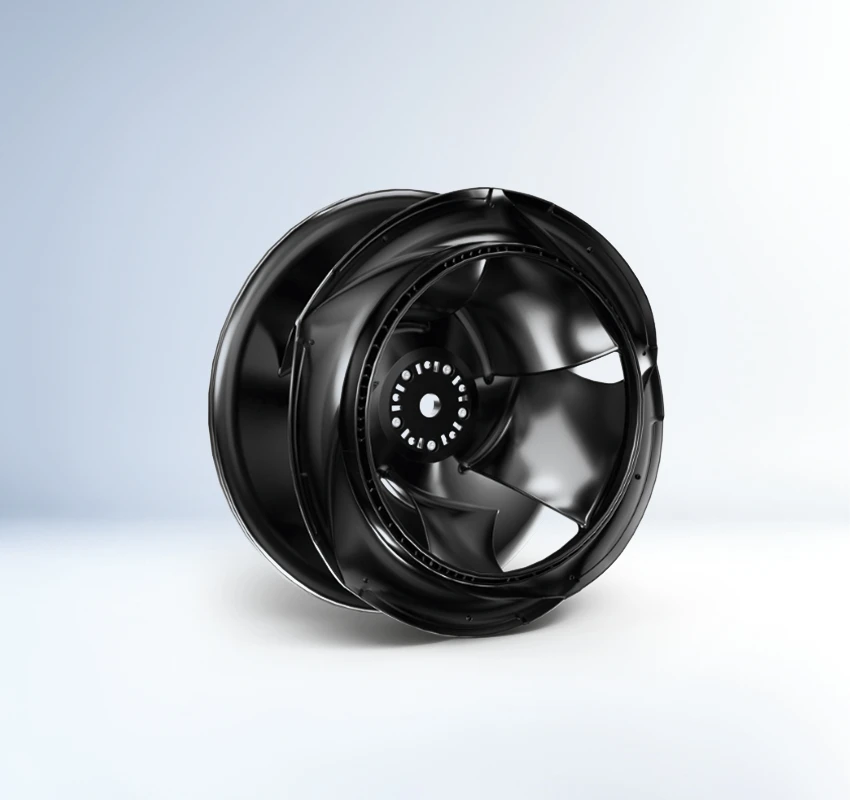
In Cleanroom equipment, R3G280-8317084540 is an EC backward-curved centrifugal fan whose documented profile includes 280 mm dimensions for installation planning; the supplied table leaves the rated voltage unspecified.
Read More
The R3G310-8317083844 serves Cleanroom as an EC backward-curved centrifugal fan, with 310 mm dimensions for installation planning as its clearest supplied attribute. No rated voltage is listed in the provided table.
Read More
For Cleanroom, R3G400-8317084403 provides an EC backward-curved centrifugal fan format with 400 mm dimensions for installation planning. Rated voltage is not shown in the supplied table and must be checked before selection.
Read More
Intended for Cleanroom, the R3G400-8317080005 is an EC backward-curved centrifugal fan characterized by 400 mm dimensions for installation planning. Its rated voltage is absent from the supplied data and requires confirmation.
Read More
Specified as an EC backward-curved centrifugal fan for Cleanroom, R3G355-8317084543 is distinguished by 355 mm dimensions for installation planning. Confirm rated voltage separately because it is not present in the supplied table.
Read More
R3G355-8317081321 is an EC backward-curved centrifugal fan for Cleanroom; the supplied table does not state its rated voltage. Its representative listed feature is 355 mm dimensions for installation planning.
Read More