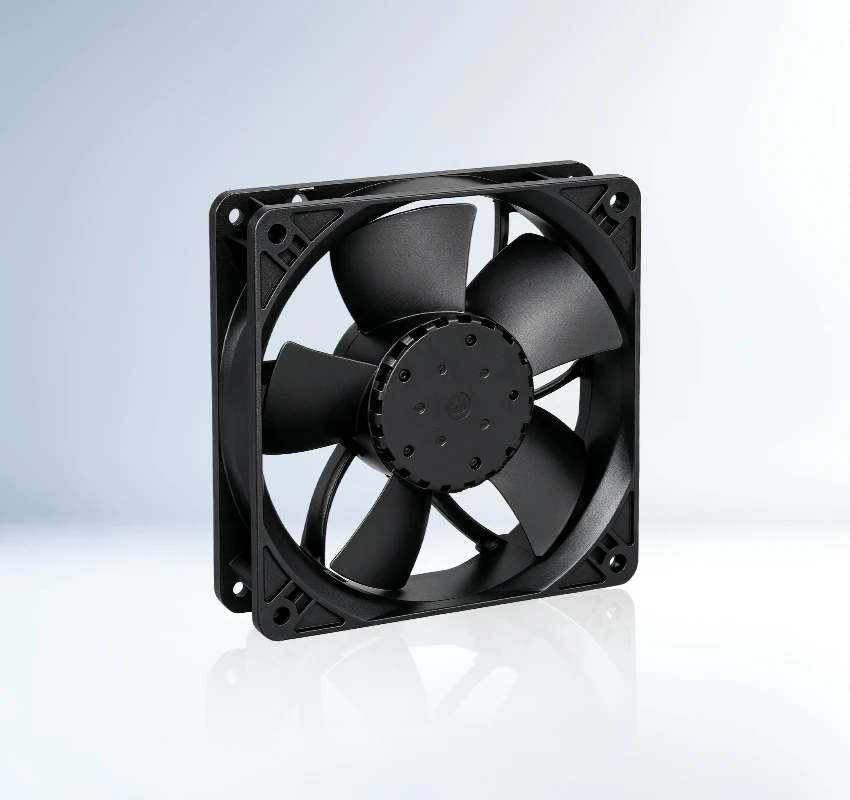
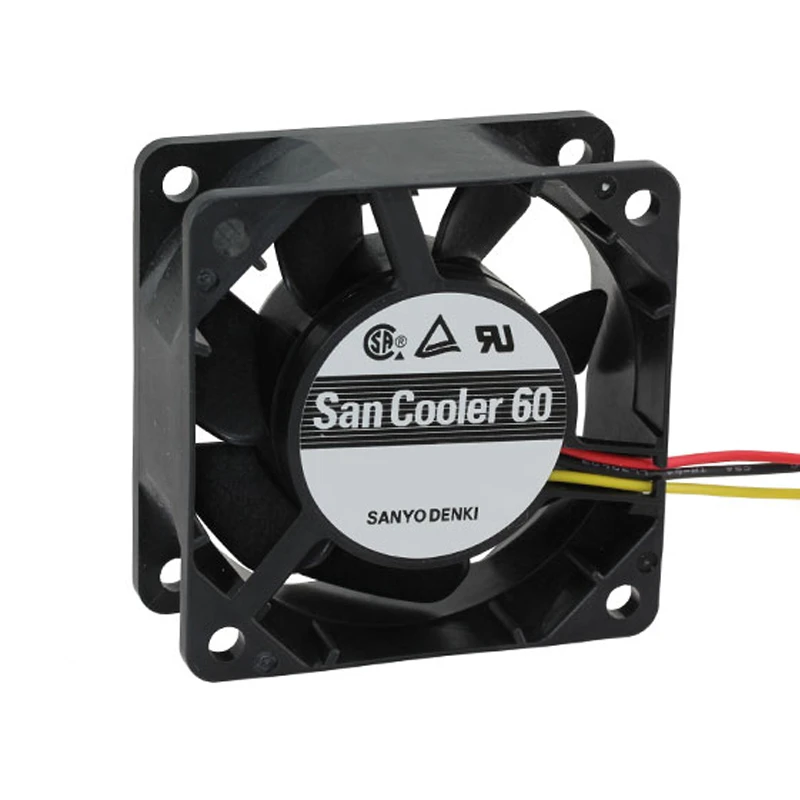
Sanyo Denki 9A0612G4D011 combines a 60 × 60 × 25 mm DC axial fan platform with a 12 VDC rating for servers, UPS systems, and telecom equipment. High airflow is highlighted together with a high-static-pressure design. A listed input of 2.88 W is the notable efficiency-related parameter. Selection focus: control interface planning acoustic value.
| Rated Voltage(V) | 12 |
|---|---|
| Size(mm) | 60*60*25 |
| Max.Air Flow(m³/h) | 46.4 |
| Max.Pressure(Pa) | 87.3 |
| Input Power(W) | 2.88 |
| Speed(rpm) | 5600 |
| Noise(db) | 39 |
SANYO DENKI positions 9A0612G4D011 as a DC axial fan for servers, storage systems and ICT equipment. It helps equipment designers manage local hot spots where natural convection is insufficient.
The rated peak airflow of 46.4 m3/h combines with 87.3 Pa pressure capability to support useful flow after installation losses are considered. Selection should include a system-resistance review, mounting check and harness confirmation. The full model code matters because signal and lead options can differ within a series.
Review grille loss at the required duty point. It gives integrators a practical acceptance criterion. Confirm the final fan curve in the assembled equipment. Preserve clear inlet and outlet space during installation.
For server chassis and computing nodes, 9A0612G4D011 provides a dedicated forced-air cooling path. Reliable ventilation reduces hot spots around sensitive electronics and supports consistent equipment availability. It supports reliable OEM equipment cooling.
SANYO DENKI 9A0612G4D011 serves storage arrays and data appliances that operate with sustained internal heat. Reliable ventilation reduces hot spots around sensitive electronics and supports consistent equipment availability. It supports reliable OEM equipment cooling.
9A0612G4D011 is suitable for network and other ICT hardware. Air circulation around processors, power devices and control electronics limits heat concentration and supports stable operation. This helps maintain dependable equipment operation. Selection should follow the approved full model code.
Confirm connector and mounting details, keep the airflow path clear, and isolate power before cleaning or service.
The worksheet lists 87.3 Pa. Use the official curve to match it to system resistance.
It is listed for servers, UPS systems, and telecom equipment. Confirm airflow, pressure, dimensions, and environmental conditions against the actual equipment.
Review ambient temperature, airflow restriction, contamination exposure, noise limit, mounting orientation, and maintenance access.
PWM or sensor functions depend on the exact suffix. Confirm the control lead and interface in the applicable Sanyo Denki datasheet.

Selected for HVAC Systems, ebm-papst A3G630-AR85-90 is a 380-480V EC axial fan, marked by 630 mm dimensions for installation planning. It provides a practical sizing reference. Its documented data supports integration planning.
Read More
Chosen for HVAC Systems, ebm-papst A3G630-AU23-35 is a 380-480V EC axial fan, rated with a listed airflow of 21,195 m³/h. This clarifies the model's listed capability. Its documented data supports integration planning.
Read More
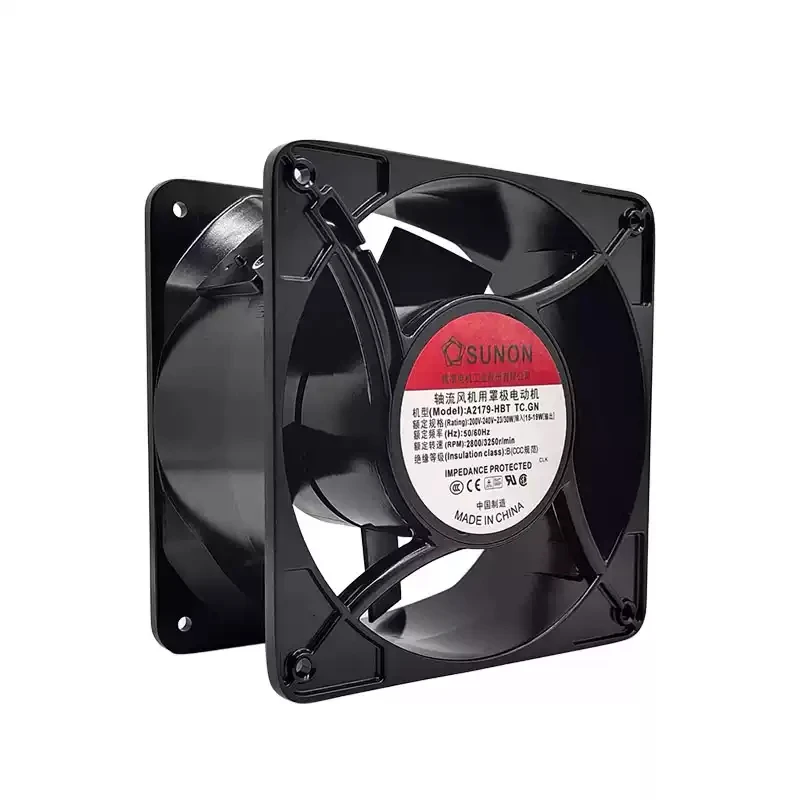
SUNON A2179-HBT TC.GN is a 230 VAC AC axial fan in a 176 × 176 × 89 mm format for commercial refrigeration and refrigerator cooling. Up to 569.5 m³/h is its most prominent listed performance figure. Use the documented sound level when planning airflow-path design. Obtain the applicable curve before final duty-point approval.
Read More
Prepared for HVAC Ventilation, ebm-papst A2E250-AE65-55 is a 230 V AC axial fan, presenting a listed airflow of 1,805 m³/h. This assists electrical and mechanical review. Its documented data supports integration planning.
Read More
Aimed at HVAC Ventilation, ebm-papst A2D250-AA26-72 is a 400 V AC axial fan, whose supplied data highlights a documented speed of 2,800 rpm. The rating aids system-fit checks. Its documented data supports integration planning.
Read More
Used in HVAC Ventilation, ebm-papst A2D300-AP02-02 is a 400 V AC axial fan, defined by a listed airflow of 3,350 m³/h. The data helps compare W-series variants. Its documented data supports integration planning.
Read More