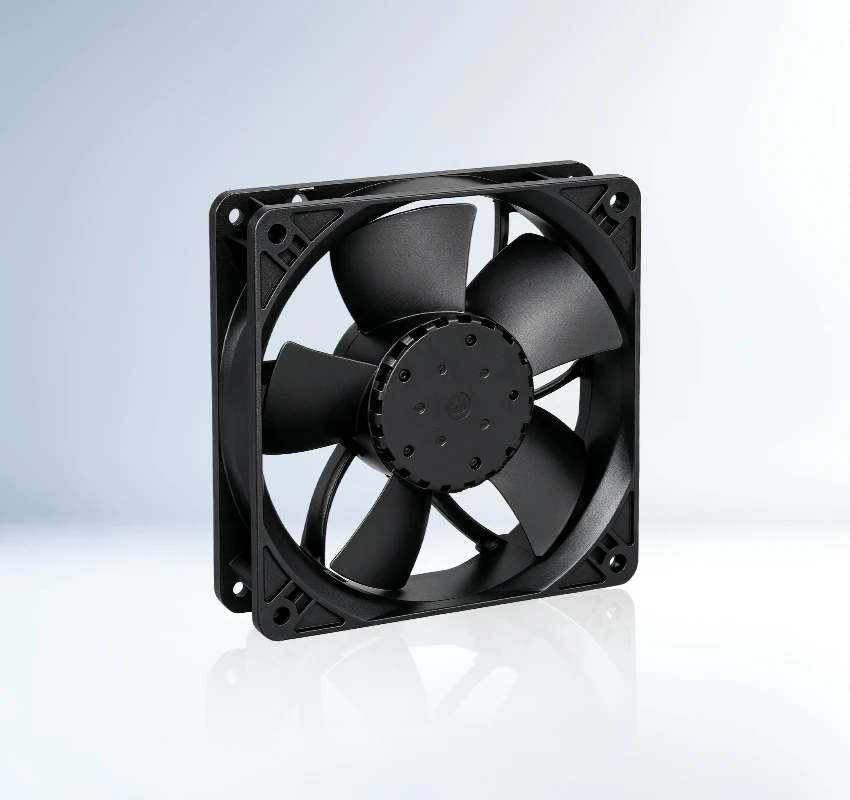
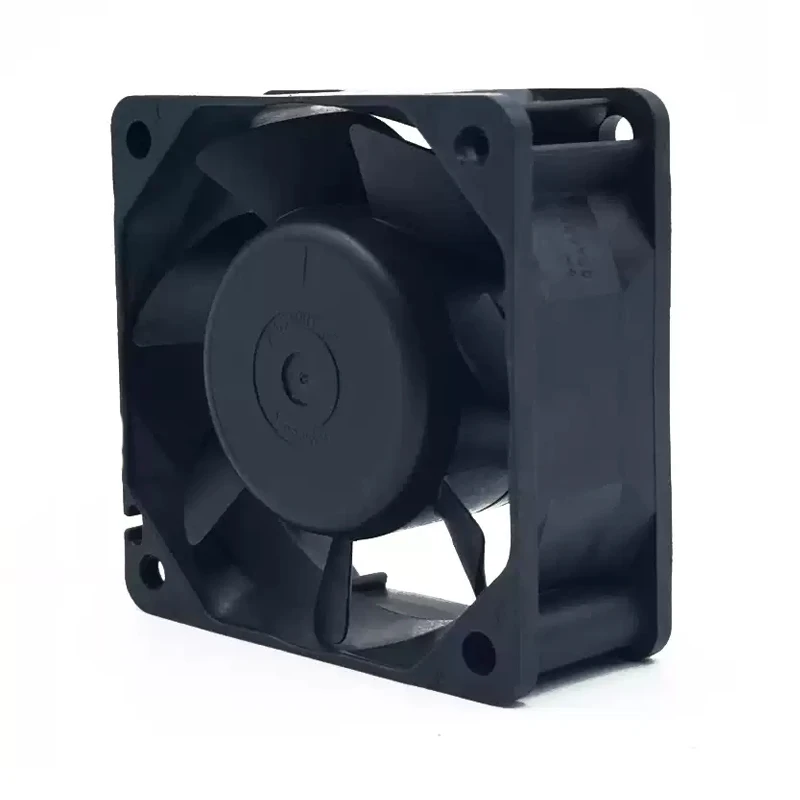
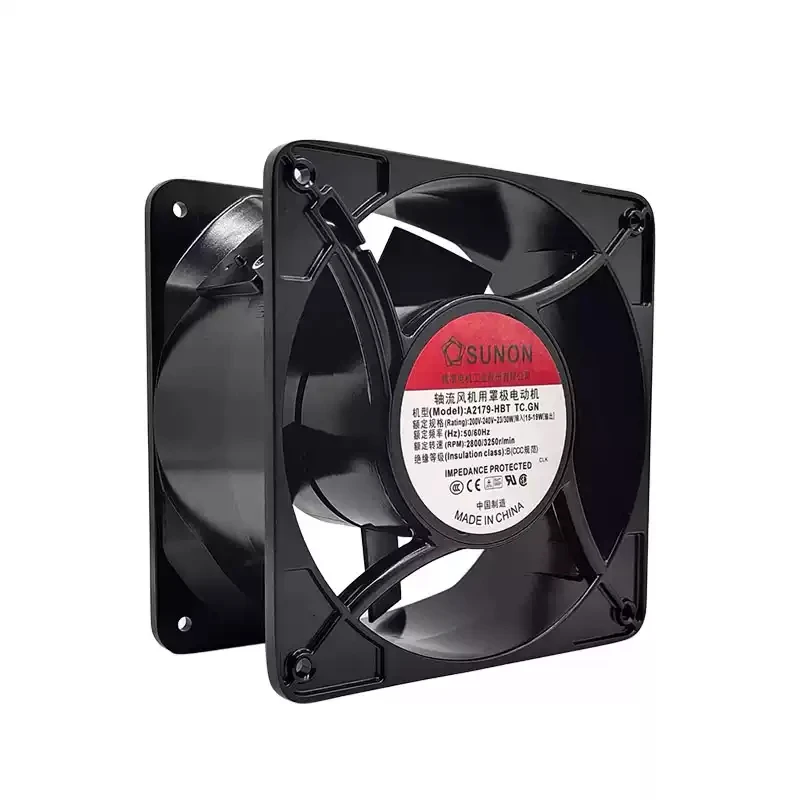
Sanyo Denki configures 9A0812G4D04 for servers, UPS systems, and telecom equipment as a 24 VDC DC axial fan with 140 × 140 × 51 mm dimensions. The 140 × 140 × 51 mm format is the primary stated selection detail. Use the documented selection parameters when planning airflow-path design. Verify the exact bearing and signal options in the datasheet.
| Rated Voltage(V) | 24 |
|---|---|
| Size(mm) | 140*140*51 |
9A0812G4D04 brings San Ace DC axial fan cooling to servers, storage systems and ICT equipment. The compact air-moving design suits OEM assemblies that require continuous ventilation around electronic and power components.
Engineers should review the model-specific fan curve against filters, grilles and enclosure resistance to confirm the required operating point. Procurement teams should match the entire part number to the approved specification. Thermal testing in a representative chassis confirms cooling margin before volume release.
Keep the impeller path clear of wiring. It helps maintenance teams plan compatible replacements. Confirm the final fan curve in the assembled equipment. Preserve clear inlet and outlet space during installation.
The San Ace 9A0812G4D04 supports thermal management in server chassis and computing nodes. Reliable ventilation reduces hot spots around sensitive electronics and supports consistent equipment availability. It provides a practical cooling path for OEM integration.
For storage arrays and data appliances, 9A0812G4D04 provides a dedicated forced-air cooling path. Reliable ventilation reduces hot spots around sensitive electronics and supports consistent equipment availability. It provides a practical cooling path for OEM integration.
SANYO DENKI 9A0812G4D04 serves network and other ICT hardware that operate with sustained internal heat. Reliable ventilation reduces hot spots around sensitive electronics and supports consistent equipment availability. It provides a practical cooling path for OEM integration.
The supplied row has no noise value. Request model-specific acoustic data when noise control is critical.
No speed value is provided for this complete model.
Confirm connector and mounting details, keep the airflow path clear, and isolate power before cleaning or service.
Use rated voltage, 140 × 140 × 51 mm dimensions for preliminary comparison.
Evaluate the exact bearing, life, temperature, alarm, and protection data. Correct sizing and clean airflow are also required for reliable operation.
Match voltage, size, mounting, airflow direction, airflow, pressure, connector, control signal, and protection before substitution.

Selected for HVAC Systems, ebm-papst A3G630-AR85-90 is a 380-480V EC axial fan, marked by 630 mm dimensions for installation planning. It provides a practical sizing reference. Its documented data supports integration planning.
Read More
Chosen for HVAC Systems, ebm-papst A3G630-AU23-35 is a 380-480V EC axial fan, rated with a listed airflow of 21,195 m³/h. This clarifies the model's listed capability. Its documented data supports integration planning.
Read More
SUNON A2179-HBT TC.GN is a 230 VAC AC axial fan in a 176 × 176 × 89 mm format for commercial refrigeration and refrigerator cooling. Up to 569.5 m³/h is its most prominent listed performance figure. Use the documented sound level when planning airflow-path design. Obtain the applicable curve before final duty-point approval.
Read More
Prepared for HVAC Ventilation, ebm-papst A2E250-AE65-55 is a 230 V AC axial fan, presenting a listed airflow of 1,805 m³/h. This assists electrical and mechanical review. Its documented data supports integration planning.
Read More
Aimed at HVAC Ventilation, ebm-papst A2D250-AA26-72 is a 400 V AC axial fan, whose supplied data highlights a documented speed of 2,800 rpm. The rating aids system-fit checks. Its documented data supports integration planning.
Read More
Used in HVAC Ventilation, ebm-papst A2D300-AP02-02 is a 400 V AC axial fan, defined by a listed airflow of 3,350 m³/h. The data helps compare W-series variants. Its documented data supports integration planning.
Read More