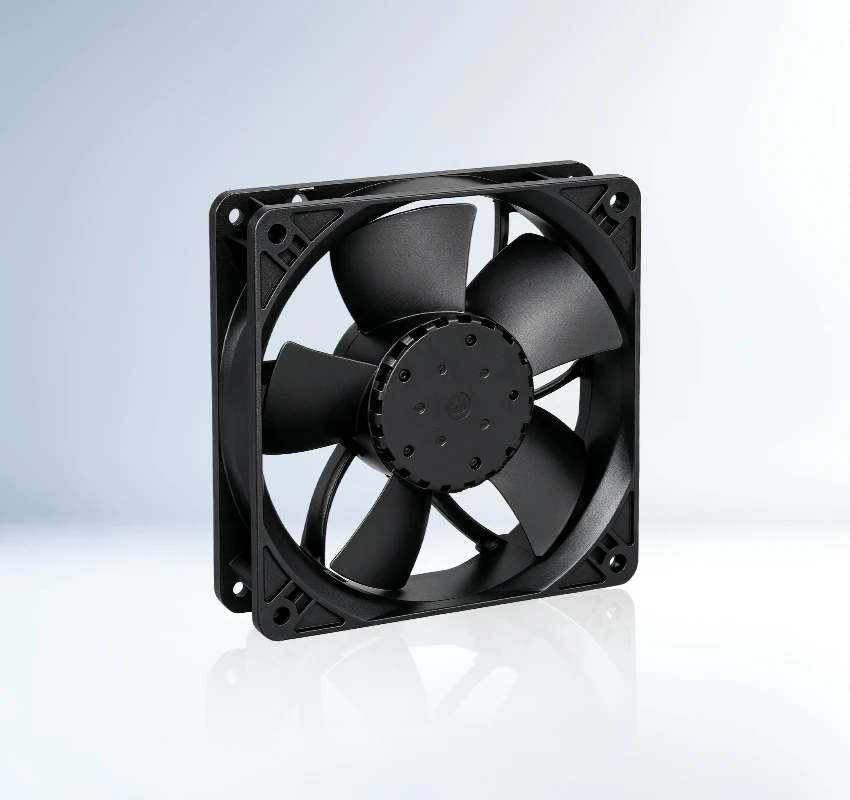
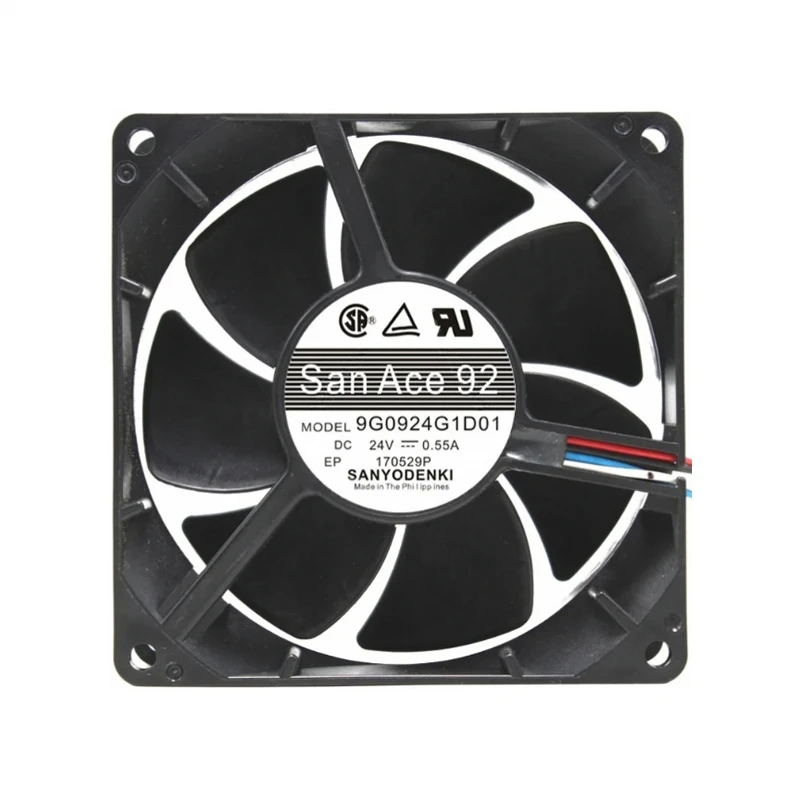
Equipment designers serving servers, UPS systems, and telecom equipment can evaluate Sanyo Denki 9G0924G1D01, a DC axial fan rated at 24 VDC and sized 92 × 92 × 38 mm. 13.2 W input is the defining electrical-load figure. The recorded performance curve should guide power-budget planning. Confirm control inputs against the complete ordering code.
| Rated Voltage(V) | 24 |
|---|---|
| Size(mm) | 92*92*38 |
| Max.Air Flow(m³/h) | 186.9 |
| Max.Pressure(Pa) | 149.9 |
| Input Power(W) | 13.2 |
| Speed(rpm) | 5000 |
| Noise(db) | 50 |
SANYO DENKI positions 9G0924G1D01 as a DC axial fan for servers, storage systems and ICT equipment. It helps equipment designers manage local hot spots where natural convection is insufficient.
With up to 186.9 m3/h airflow and 149.9 Pa static pressure, the model can move cooling air through vents, filters and compact internal passages. A carefully balanced rotating system supports low vibration and consistent airflow. The structure is suited to long operating cycles where equipment access and maintenance time are limited. Procurement teams should match the entire part number to the approved specification. Thermal testing in a representative chassis confirms cooling margin before volume release.
Map airflow around the hottest components. The result supports repeatable OEM assembly.
The San Ace 9G0924G1D01 supports thermal management in server chassis and computing nodes. Air circulation around processors, power devices and control electronics limits heat concentration and supports stable operation. It supports reliable OEM equipment cooling.
For storage arrays and data appliances, 9G0924G1D01 provides a dedicated forced-air cooling path. Air circulation around processors, power devices and control electronics limits heat concentration and supports stable operation. It supports reliable OEM equipment cooling.
SANYO DENKI 9G0924G1D01 serves network and other ICT hardware that operate with sustained internal heat. Air circulation around processors, power devices and control electronics limits heat concentration and supports stable operation. It supports reliable OEM equipment cooling.
Confirm connector and mounting details, keep the airflow path clear, and isolate power before cleaning or service.
The worksheet lists 149.9 Pa. Use the official curve to match it to system resistance.
It is listed for servers, UPS systems, and telecom equipment. Confirm airflow, pressure, dimensions, and environmental conditions against the actual equipment.
No exact IP rating is supplied for this model row. Check the current model datasheet before use in water, dust, or oil exposure.
Inspect dust buildup, airflow blockage, abnormal noise, mounting security, and wiring condition; disconnect power before service.
Availability and lead time can change. Confirm the exact suffix, quantity, and delivery date with the supplier before ordering.

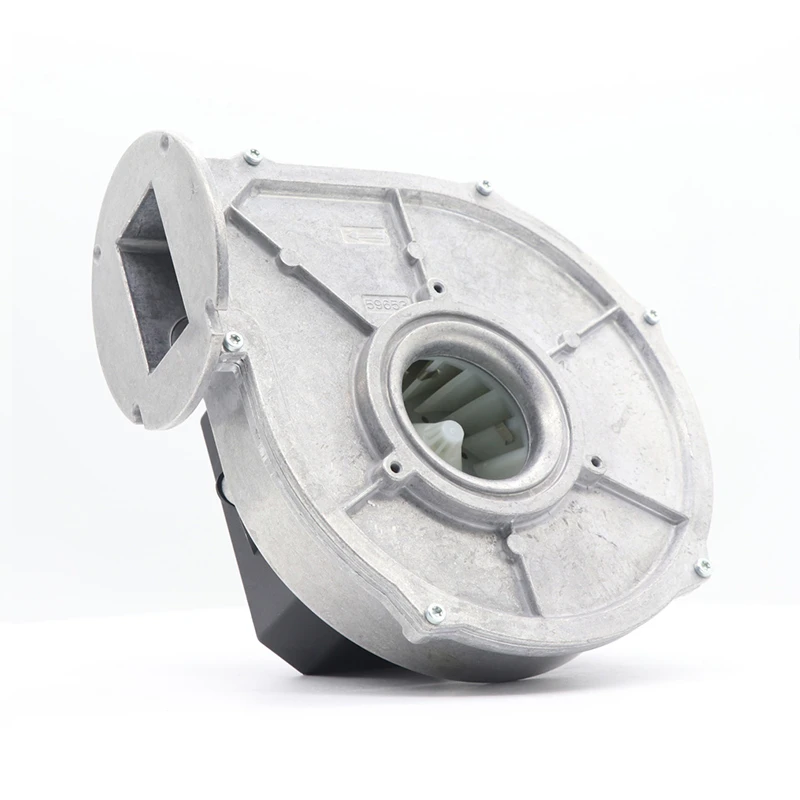
Aimed at Boiler Systems, the ebm-papst G1G146-BA07-52 is a 24 V EC backward-curved centrifugal fan, for which the table lists a listed pressure capability of 500 Pa. This assists electrical and mechanical review.
Read More
Integrated into Boiler Systems, the ebm-papst G1G133-DE19-15 is a 24 V EC backward-curved centrifugal fan, specified with a documented 45 W input rating. The rating aids system-fit checks.
Read More
Suited to Boiler Systems, ebm-papst G1G097-AA05-01 is a 24 V EC backward-curved centrifugal fan, marked by a documented 16 W input rating. It provides a practical sizing reference.
Read More
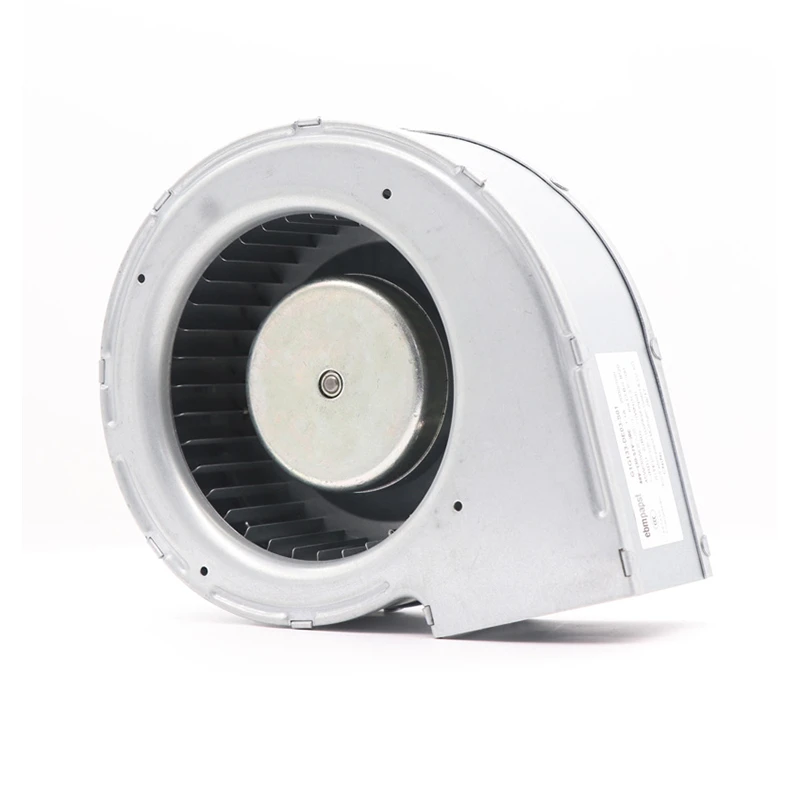
Built for hvac, G1G170-AB53-80 is a 230 V EC centrifugal blower. 5,830 rpm operation with 0-10 V/PWM speed control is its clearest differentiator in the supplied data. It supports exact-model comparison for OEM sourcing.
Read More
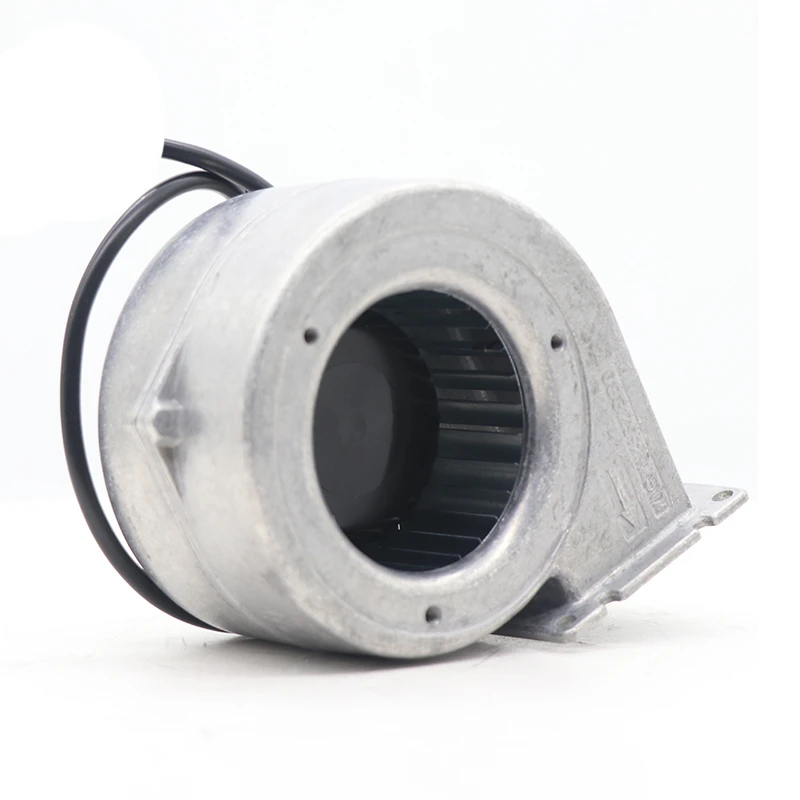
A 230 V EC centrifugal blower for boiler systems, G1G170-AB53-01 has a clearly defined selection profile. Its selection profile is led by 2,500 Pa pressure with 5,830 rpm operation.
Read More
Targeting hvac, G1G170-AB31-53 pairs 230 V operation with a EC centrifugal blower layout. The model's defining specification is PWM speed control with 6,530 rpm operation. It supports exact-model comparison for OEM sourcing.
Read More