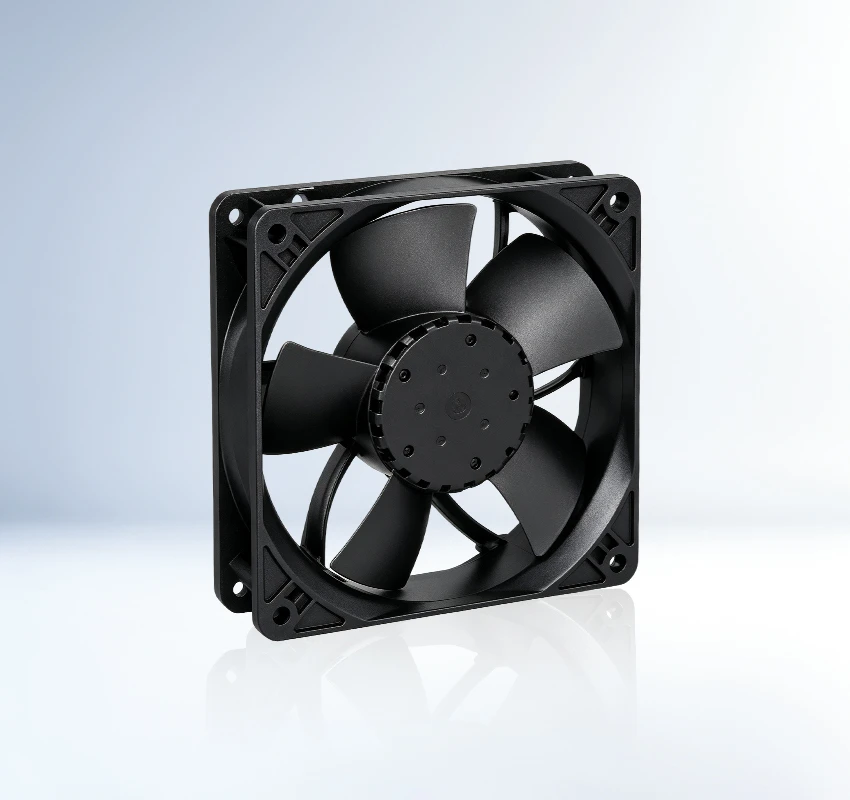
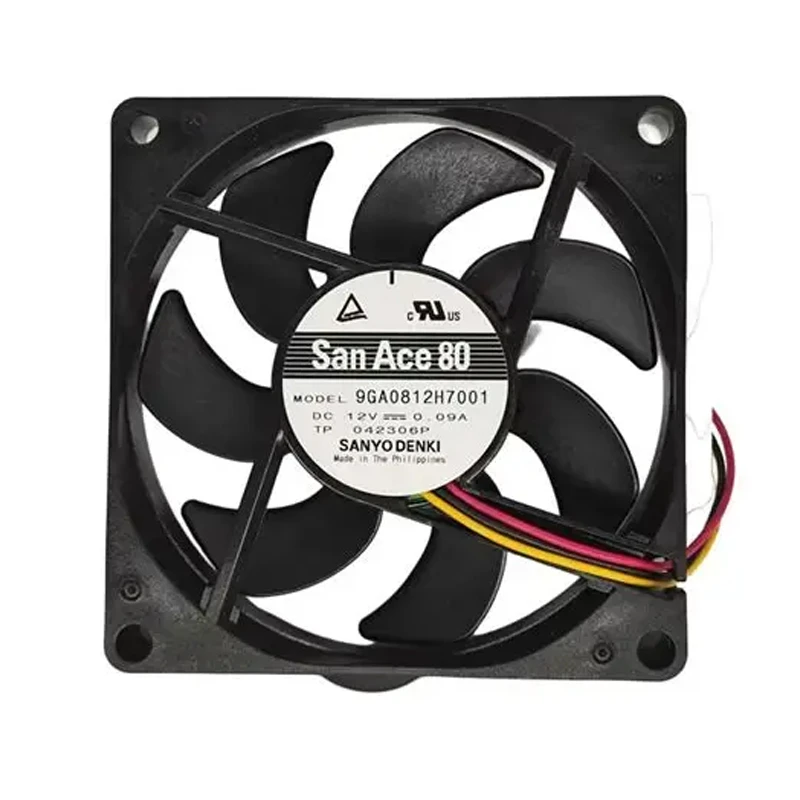
Sanyo Denki configures 9GA0812H7001 for servers, UPS systems, and telecom equipment as a 12 VDC DC axial fan with 80 × 80 × 15 mm dimensions. A listed input of 1.08 W is the notable efficiency-related parameter. For duty-point matching, start with the supplied suffix definition. Match the exact part number before approving a substitute.
| Rated Voltage(V) | 12 |
|---|---|
| Size(mm) | 80*80*15 mm |
| Max.Air Flow(m³/h) | 53.4 |
| Max.Pressure(Pa) | 32.6 |
| Input Power(W) | 1.08 |
| Speed(rpm) | 3800 |
| Noise(db) | 29 |
SANYO DENKI positions 9GA0812H7001 as a DC axial fan for servers, storage systems and ICT equipment. It helps equipment designers manage local hot spots where natural convection is insufficient.
With up to 53.4 m3/h airflow and 32.6 Pa static pressure, the model can move cooling air through vents, filters and compact internal passages. Selection should include a system-resistance review, mounting check and harness confirmation. The full model code matters because signal and lead options can differ within a series.
Preserve outlet space to limit recirculation. It also creates a clearer thermal approval record. Confirm the final fan curve in the assembled equipment. Preserve clear inlet and outlet space during installation.
The San Ace 9GA0812H7001 supports thermal management in server chassis and computing nodes. These systems need continuous heat removal because compact layouts and rising power density restrict natural convection. It provides a practical cooling path for OEM integration.
For storage arrays and data appliances, 9GA0812H7001 provides a dedicated forced-air cooling path. These systems need continuous heat removal because compact layouts and rising power density restrict natural convection. It provides a practical cooling path for OEM integration.
SANYO DENKI 9GA0812H7001 serves network and other ICT hardware that operate with sustained internal heat. These systems need continuous heat removal because compact layouts and rising power density restrict natural convection. It provides a practical cooling path for OEM integration.
The worksheet lists 1.08 W. Check supply capacity and operating conditions before commissioning.
Verify supply, connector, obstructions, impeller movement, and alarm or protection status using the model-specific troubleshooting data.
Confirm full suffix, voltage, connector, control signal, bearing, IP rating, certifications, stock, and required delivery date.
The worksheet lists 32.6 Pa. Use the official curve to match it to system resistance.
The workbook marks it RoHS compliant. Confirm model-specific UL, CSA, TÜV, or other required approvals from official documentation.
Review ambient temperature, airflow restriction, contamination exposure, noise limit, mounting orientation, and maintenance access.