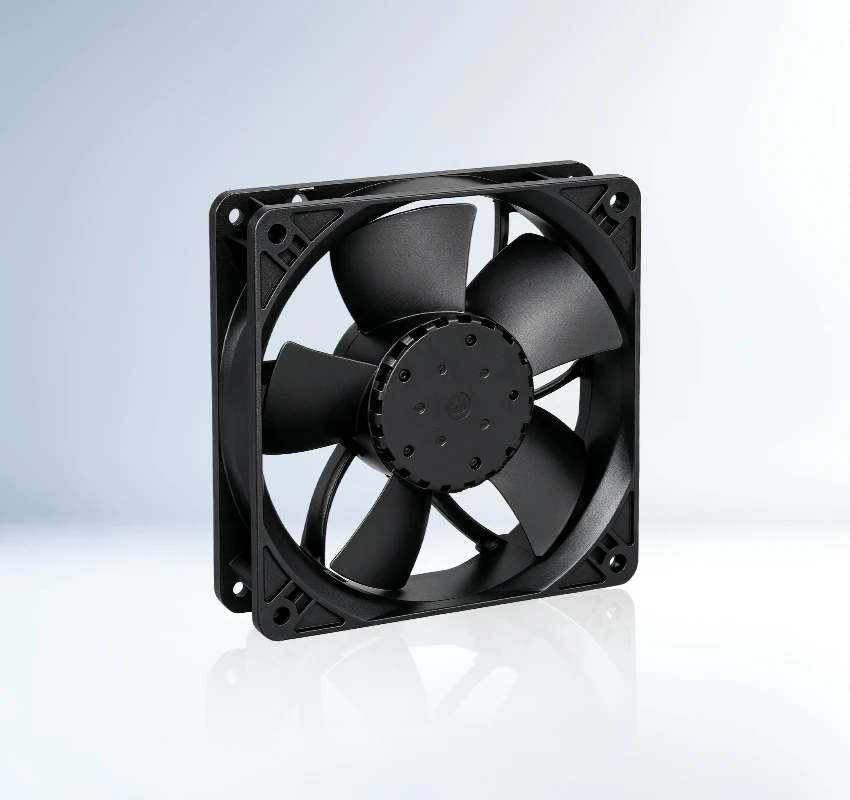
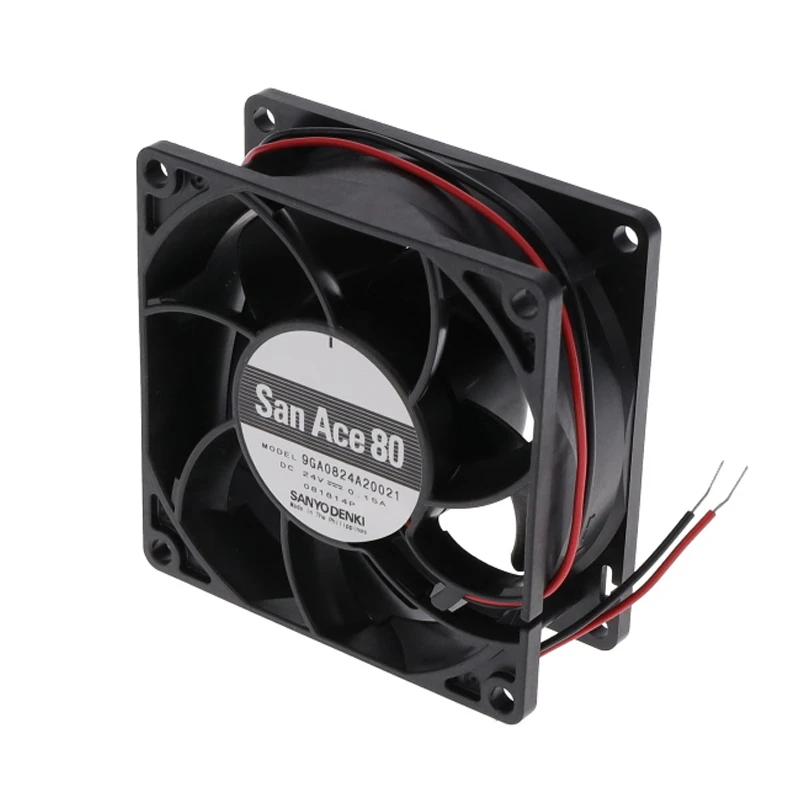
The 9GA0824J40021 is a Sanyo Denki 24 VDC, 80 × 80 × 25.2 mm DC axial fan for servers, UPS systems, and telecom equipment. Long-life series construction is the main characteristic stated in the supplied reference. The recorded speed benchmark should guide enclosure sizing. Confirm control inputs against the complete ordering code.
| Rated Voltage(V) | 24 |
|---|---|
| Size(mm) | 80*80*25.2 |
| Max.Air Flow(m³/h) | 122.4 |
| Max.Pressure(Pa) | 174.4 |
| Input Power(W) | 6.72 |
| Speed(rpm) | 7400 |
| Noise(db) | 48 |
SANYO DENKI positions 9GA0824J40021 as a DC axial fan for servers, storage systems and ICT equipment. It helps equipment designers manage local hot spots where natural convection is insufficient.
The rated peak airflow of 122.4 m3/h combines with 174.4 Pa pressure capability to support useful flow after installation losses are considered. OEM qualification should check startup demand, installation orientation and the exact electrical interface. Installed sound and airflow depend on the surrounding cabinet structure.
Test component temperatures at peak load. The review links cooling performance to the approved BOM. Confirm the final fan curve in the assembled equipment. Preserve clear inlet and outlet space during installation.
For server chassis and computing nodes, 9GA0824J40021 provides a dedicated forced-air cooling path. These systems need continuous heat removal because compact layouts and rising power density restrict natural convection. It provides a practical cooling path for OEM integration.
SANYO DENKI 9GA0824J40021 serves storage arrays and data appliances that operate with sustained internal heat. These systems need continuous heat removal because compact layouts and rising power density restrict natural convection. It provides a practical cooling path for OEM integration.
9GA0824J40021 is suitable for network and other ICT hardware. Directed airflow carries component heat toward the equipment exhaust and helps maintain a controlled internal temperature. It provides a practical cooling path for OEM integration. Selection should follow the approved full model code.
The workbook marks it RoHS compliant. Confirm model-specific UL, CSA, TÜV, or other required approvals from official documentation.
The reference lists IP20. Confirm that the exact ordered suffix carries the required environmental rating.
Inspect dust buildup, airflow blockage, abnormal noise, mounting security, and wiring condition; disconnect power before service.
Compare its listed power with the required airflow, pressure, and operating hours. System-level savings depend on correct duty-point selection.
The worksheet lists 6.72 W. Check supply capacity and operating conditions before commissioning.