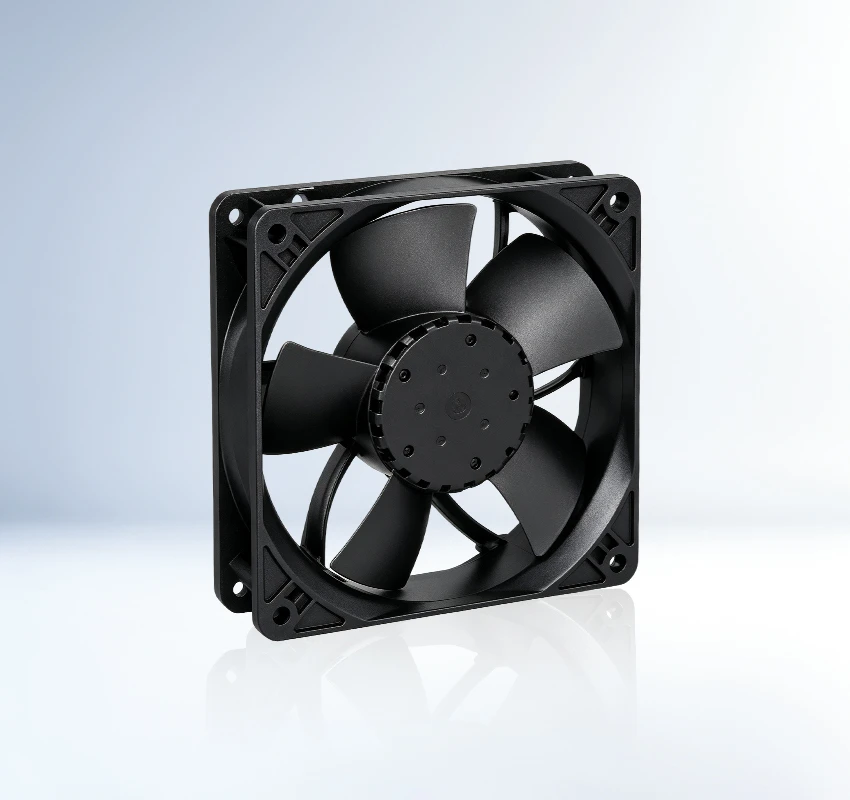
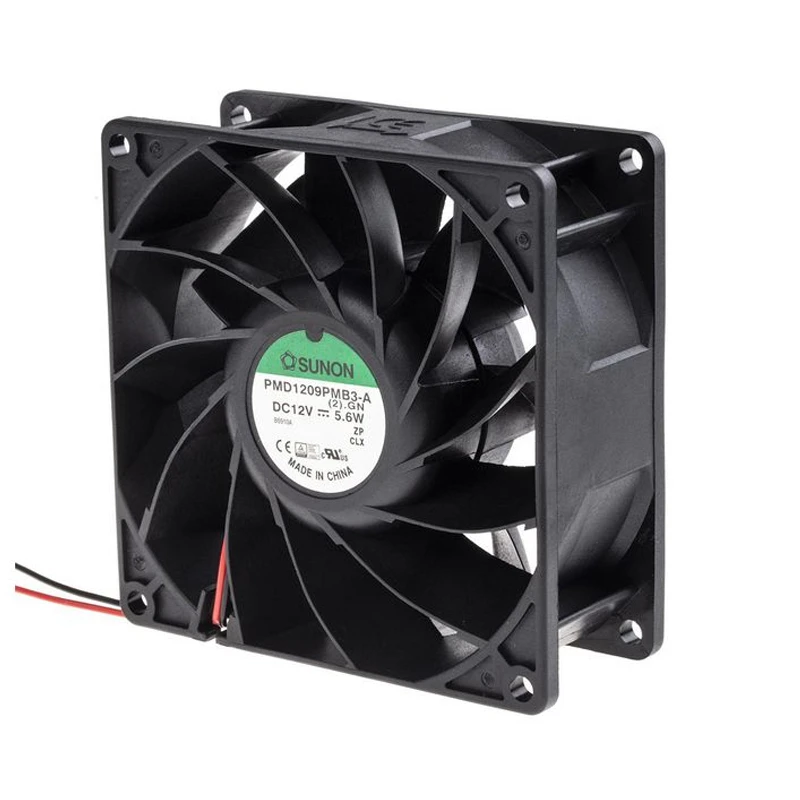
SUNON PMD1209PMB3-A.VDC combines a 92 × 92 × 38 mm DC axial fan platform with a 12 VDC rating for industrial electronics and equipment cooling. Up to 155.8 m³/h is its most prominent listed performance figure. Treat the static-pressure entry as a primary input to engineering comparison. Confirm temperature and service-life limits from current data.
| Rated Voltage(V) | 12 |
|---|---|
| Size(mm) | 92x92x38mm |
| Max.Air Flow(m³/h) | 155.8 |
| Max.Pressure(Pa) | 107.1 |
| Input Power(W) | 5.6 |
| Speed(rpm) | 3800 |
| Noise(db) | 50.3 |
Designed for industrial equipment, the SUNON PMD1209PMB3-A.VDC provides DC brushless axial fan cooling in a format suited to equipment integration. It helps limit local heat buildup during operation.
The brushless DC motor architecture supports efficient electronic commutation and stable rotational performance for compact equipment cooling. Rigid mounting and clear breathing space help control vibration, flow loss and the acoustic result of the complete assembly.
Before adopting PMD1209PMB3-A.VDC, engineers should evaluate mounting rigidity. Carry out wiring verification before volume production so the chosen fan can be released with clear installation and sourcing requirements. Match polarity, leads and control functions to the equipment harness.
The worksheet lists 50.3 dB. Installation distance, airflow resistance, and enclosure acoustics can change the measured result.
The worksheet lists up to 155.8 m³/h. Verify the operating point against system resistance.
The exact bearing option is not confirmed by the row-level data. Check the complete suffix in the current SUNON specification.
Use the listed voltage, size, 155.8 m³/h airflow, 3800 rpm, and 5.6 W input for preliminary comparison.
It is listed for industrial electronics and equipment cooling. Check dimensions, airflow, pressure, and the installation environment against the actual equipment.
Confirm any missing bearing, connector, control, IP rating, life, certification, and performance-curve details for the complete part number.

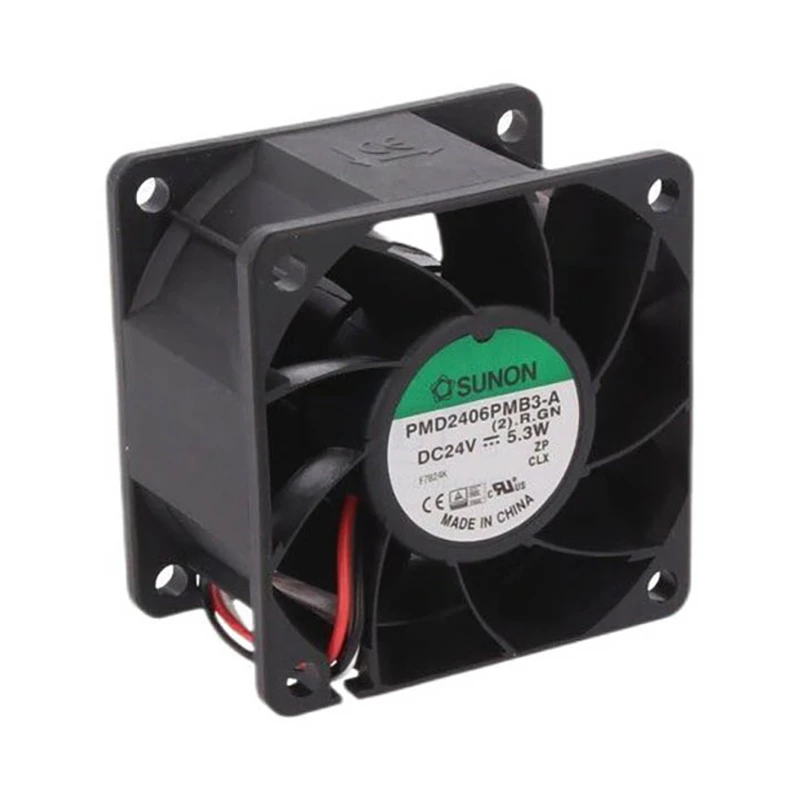
The 60 × 60 × 38 mm PMD2406PMB3-A.VDC brings 24 VDC DC blower cooling to industrial electronics and equipment cooling. 132 Pa maximum pressure is the standout documented duty-point value. Treat the equipment fit as a primary input to engineering comparison. Confirm temperature and service-life limits from current data.
Read More
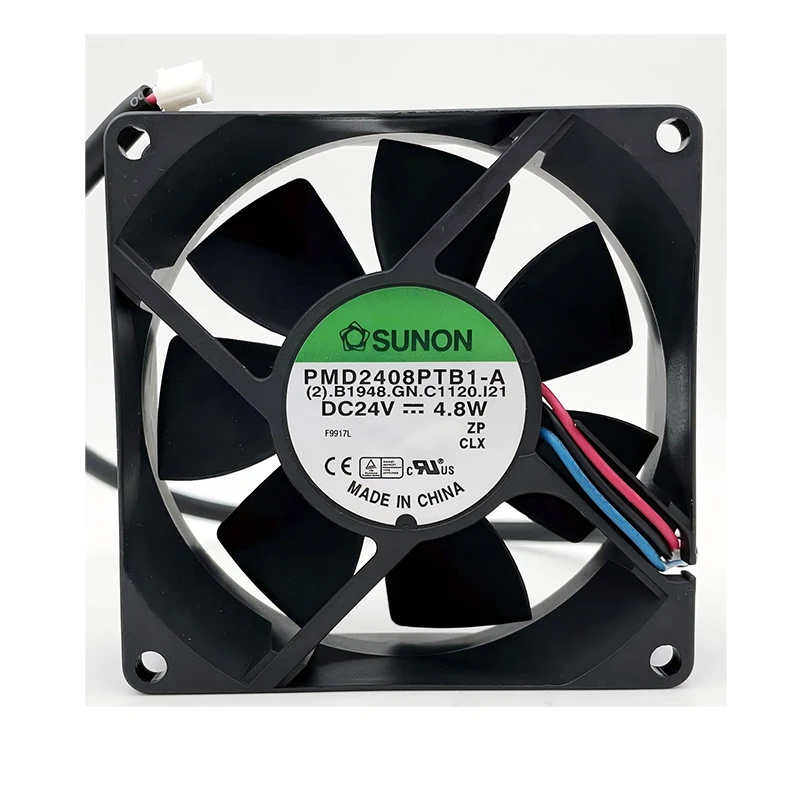
For airflow duties across industrial electronics and equipment cooling, the PMD2408PTB1-A.VDC provides a 0 VDC DC blower configuration measuring 80 × 80 × 38 mm. Its 80 × 80 × 38 mm format is the main stated selection detail. Review its supply requirement during engineering comparison. Confirm temperature and service-life limits from current data.
Read More
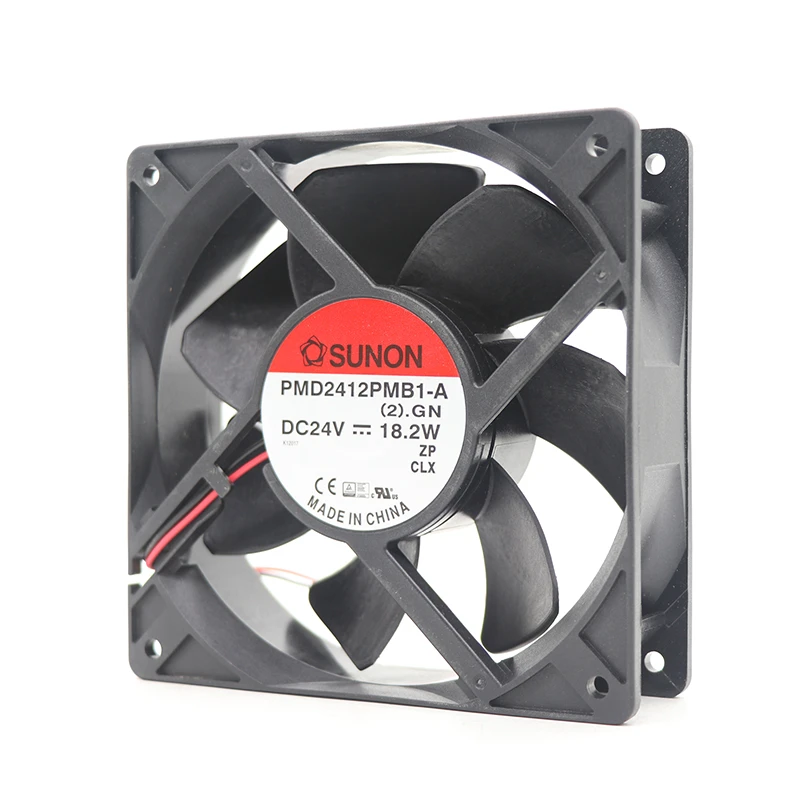
Specified at 24 VDC, PMD2412PMB1 is a SUNON DC axial fan for industrial electronics and equipment cooling in 120 × 120 × 38 mm dimensions. Up to 322.8 m³/h is its most prominent listed performance figure. The recorded rotational rating should guide engineering comparison. Confirm temperature and service-life limits from current data.
Read More
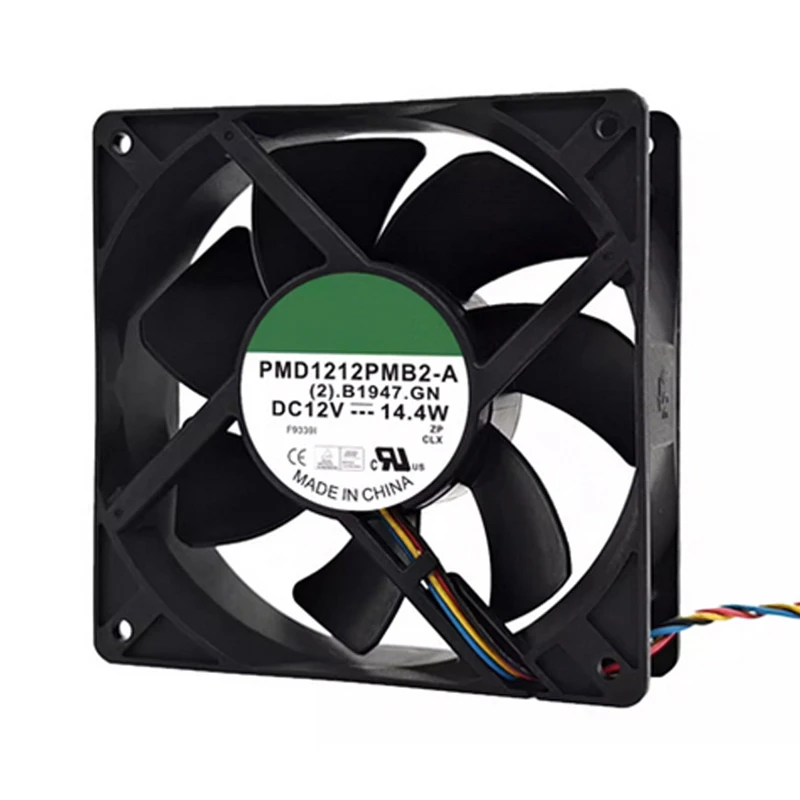
SUNON PMD1212PMB2-A combines a 120 × 120 × 38 mm DC axial fan platform with a 12 VDC rating for industrial electronics and equipment cooling. Up to 288.8 m³/h is its most prominent listed performance figure. During engineering comparison, compare the model's installation footprint. Confirm temperature and service-life limits from current data.
Read More
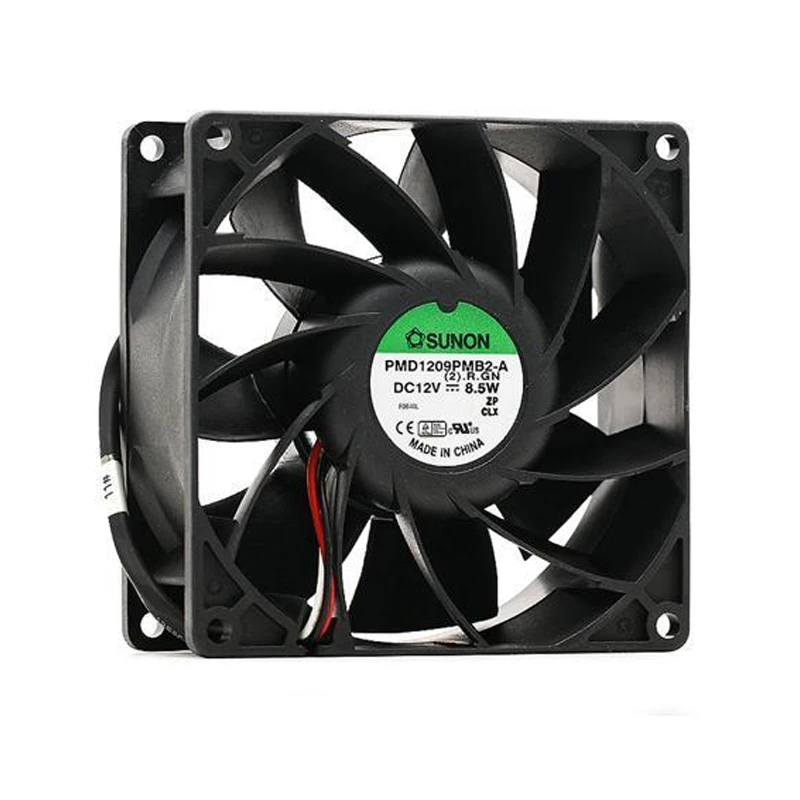
Applied in industrial electronics and equipment cooling, SUNON PMD1209PMB2-A is a 12 VDC DC axial fan in a 92 × 92 × 38 mm frame. Up to 180.6 m³/h is its most prominent listed performance figure. The recorded selection parameters should guide engineering comparison. Confirm temperature and service-life limits from current data.
Read More.GN-0.webp)
Within industrial electronics and equipment cooling, SUNON PMD1209PMB1-A(2).GN serves as a 92 × 92 × 38 mm DC axial fan operating at 12 VDC. Up to 204.34 m³/h is its most prominent listed performance figure. For engineering comparison, start with the supplied rated dataset. Confirm temperature and service-life limits from current data.
Read More