Get Quote
Home > EC Axial

EC Axial

By type

By industry

Rated Voltage(V)

Size(mm)

Max.Air Flow(m³/h)

Max.Pressure(Pa)

Input Power(W)

Speed(rpm)

Noise(db)

Stocking Options

Environmental Options

Media

Exclude

132 results

Applied Filters

Showing
81-100
1-20 21-40 41-60 61-80 81-100 101-120 121-132
of 132
Download Table
Mfr Part # Rated Voltage(V) Size(mm) Max.Air Flow(m³/h) Max.Pressure(Pa) Input Power(W) Speed(rpm) Noise(db)
W2G130-AA33-01 | ebm-papst 24V 16W EC Axial Fan for Air Handling Cooling

Suited to Air Handling Cooling, ebm-papst W2G130-AA33-01 is a 24 V EC axial fan, characterized by a documented 16 W input rating. The value aids operating-point comparison. Its documented data supports integration planning.

24 172*150*55 400 88 16 3150 -
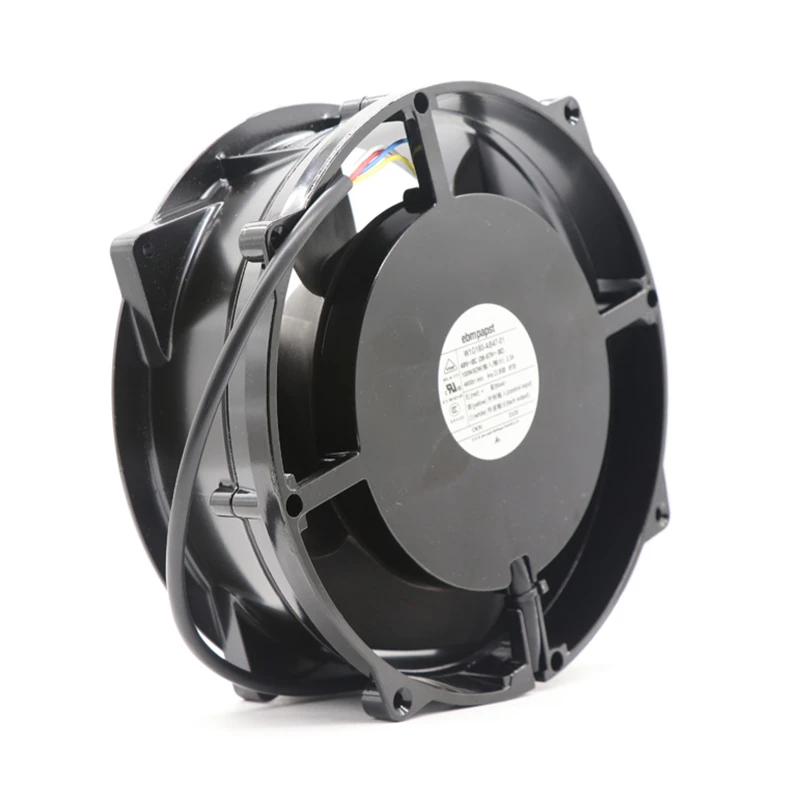
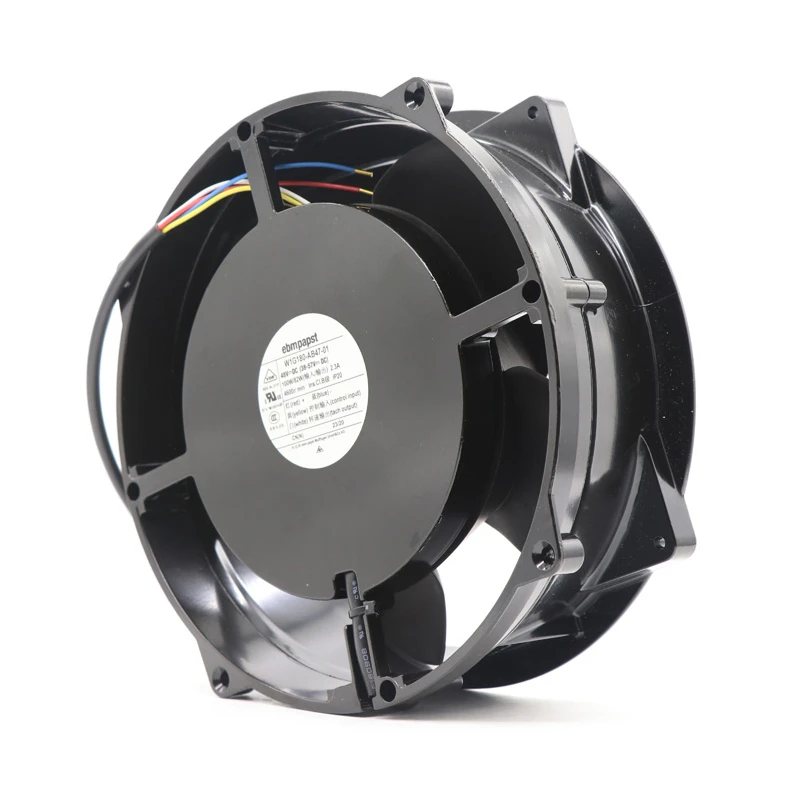
W1G180-AB47-22 | ebm-papst 48V 100W EC Axial Fan for Air Handling Cooling

Supporting Air Handling Cooling, ebm-papst W1G180-AB47-22 is a 48 V EC axial fan, offering a documented speed of 4,600 rpm. The figure supports compatibility review. Its documented data supports integration planning.

48 180 925 300 100 4600 -
W1G200-EA87-65 | ebm-papst 230V EC Axial Fan for Air Handling Cooling

Built for Air Handling Cooling, the ebm-papst W1G200-EA87-65 is a 230 V EC axial fan, characterized by 200 mm dimensions for installation planning. The value helps verify equipment fit.

230 200 - - - - -
W1G200-EA87-63/A01 | ebm-papst 230V EC Axial Fan for Air Handling Cooling

Prepared for Air Handling Cooling, the ebm-papst W1G200-EA87-63/A01 is a 230 V EC axial fan, recognized through 200 mm dimensions for installation planning. This guides model-to-system comparison.

230 200 - - - - -
W1G300-CE19-52 | ebm-papst 24V 90W EC Axial Fan for Air Handling Cooling

Designed for Air Handling Cooling, the ebm-papst W1G300-CE19-52 is a 24 V EC axial fan, whose supplied data highlights a documented 90 W input rating. The rating clarifies its operating profile.

24 300 2430 90 90 1800 -
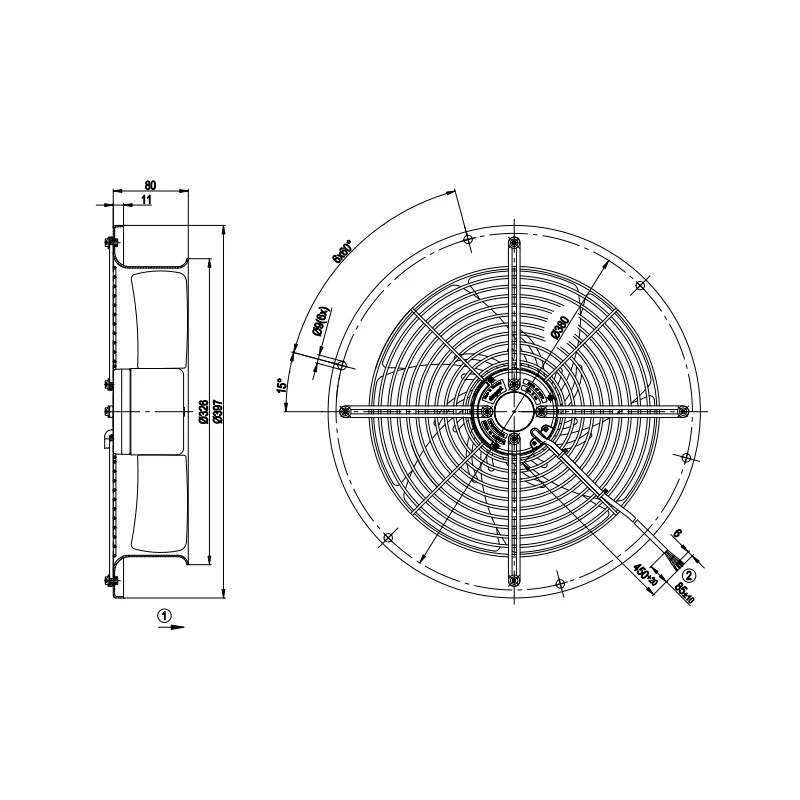
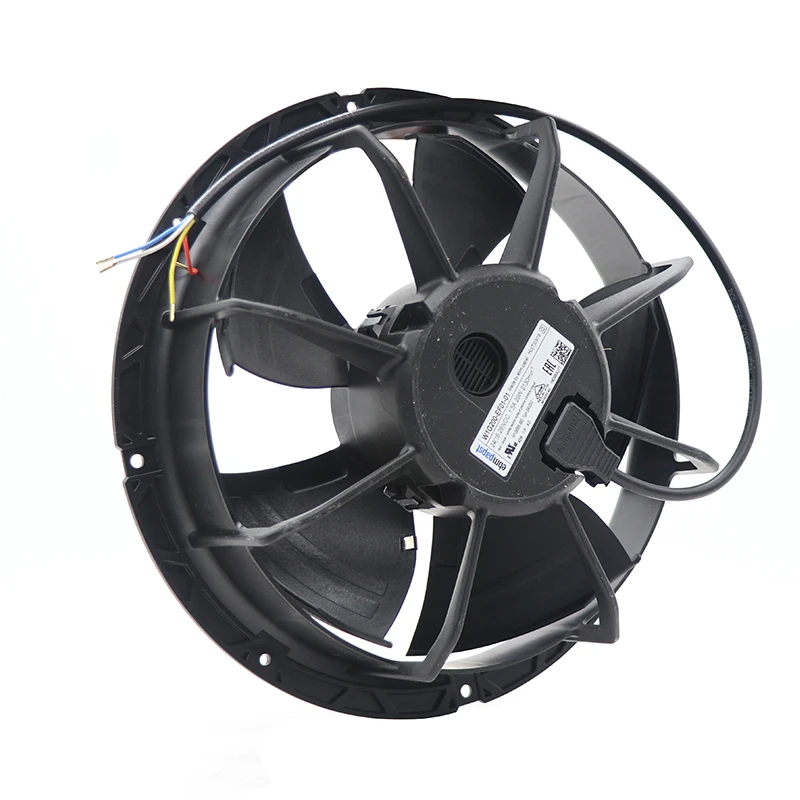
W1G200-EF01-01 | ebm-papst 24V 29W EC Axial Fan for Air Handling Cooling

Focused on Air Handling Cooling, ebm-papst W1G200-EF01-01 is a 24 V EC axial fan, offering 200 mm dimensions for installation planning. The figure supports compatibility review. Its documented data supports integration planning.

24 200 - - 29 2130 -
W1G172-EC91-13 | ebm-papst 230V 22W EC Axial Fan for Air Handling Cooling

Engineered around Air Handling Cooling, the ebm-papst W1G172-EC91-13 is a 230 V EC axial fan, combining its format with a documented 22 W input rating. The parameter assists integration checks.

230 172 525 60 22 2500 55
W1G300-EC24-14 | ebm-papst 26V 225W EC Axial Fan for Air Handling Cooling

Assigned to Air Handling Cooling, ebm-papst W1G300-EC24-14 is a 26 V EC axial fan, centered on a documented speed of 3,000 rpm. This clarifies the model's listed capability. Its documented data supports integration planning.

26 300 2850 225 225 3000 -
W1G200-EC91-45 | ebm-papst 230V 31W EC Axial Fan for Air Handling Cooling

Assigned to Air Handling Cooling, ebm-papst W1G200-EC91-45 is a 230 V EC axial fan, recognized through a documented 31 W input rating. This supports duty-point selection. Its documented data supports integration planning.

230 200 750 55 31 2100 55
W1G300-EC24-03/AF01 | ebm-papst 26V 255W EC Axial Fan for Refrigeration Cooling

Deployed in Refrigeration Cooling, ebm-papst W1G300-EC24-03/AF01 is a 26 V EC axial fan, noted for a documented speed of 3,100 rpm. The figure helps confirm design suitability. Its documented data supports integration planning.

26 300 2875 94 255 3100 74
W1G300-EC24-03 | ebm-papst 26V 245W EC Axial Fan for Refrigeration Cooling

Intended for Refrigeration Cooling, ebm-papst W1G300-EC24-03 is a 26 V EC axial fan, rated with a listed pressure capability of 259 Pa. This helps guide installation planning. Its documented data supports integration planning.

26 300 2875 259 245 3040 66
W1G250-HH37-52 | ebm-papst 24V 105W EC Axial Fan for Air Handling Cooling

Aimed at Air Handling Cooling, ebm-papst W1G250-HH37-52 is a 24 V EC axial fan, defined by a documented 105 W input rating. The data helps compare W-series variants. Its documented data supports integration planning.

24 280*280*80 2045 140 105 2750 -
W1G200-HH77-52 | ebm-papst 24V 55W EC Axial Fan for New Energy Cooling

Configured for New Energy Cooling, ebm-papst W1G200-HH77-52 is a 24 V EC axial fan, featuring a documented 55 W input rating. This guides model-to-system comparison. Its documented data supports integration planning.

24 225*225*80 - 110 55 2950 -
W1G200-HH01-52 | ebm-papst 48V 55W EC Axial Fan for Medical Equipment Cooling

Adapted for Medical Equipment Cooling, the ebm-papst W1G200-HH01-52 is a 48 V EC axial fan, distinguished by 200 mm dimensions for installation planning. It gives project engineers a selection cue.

48 200 - 120 55 2950 -
W1G200-EA91-45 | ebm-papst 230V 27W EC Axial Fan for Refrigeration Cooling

Configured for Refrigeration Cooling, ebm-papst W1G200-EA91-45 is a 230 V EC axial fan, presenting a listed acoustic value of 53 dB. It supports an evidence-based shortlist. Its documented data supports integration planning.

230 200 820 55 27 2200 53
W1G200-EA87-25 | ebm-papst 230V 7W EC Axial Fan for Refrigeration Cooling

Created for Refrigeration Cooling, ebm-papst W1G200-EA87-25 is a 230 V EC axial fan, rated with a documented 7 W input rating. This clarifies the model's listed capability. Its documented data supports integration planning.

230 200 515 13 7 1400 43
W1G180-AB47-01 | ebm-papst 48V 100W EC Axial Fan for Equipment Cooling

Developed for Equipment Cooling, ebm-papst W1G180-AB47-01 is a 48 V EC axial fan, characterized by a documented speed of 4,600 rpm. It gives buyers a documented reference. Its documented data supports integration planning.

48 180 1035 369 100 4600 -
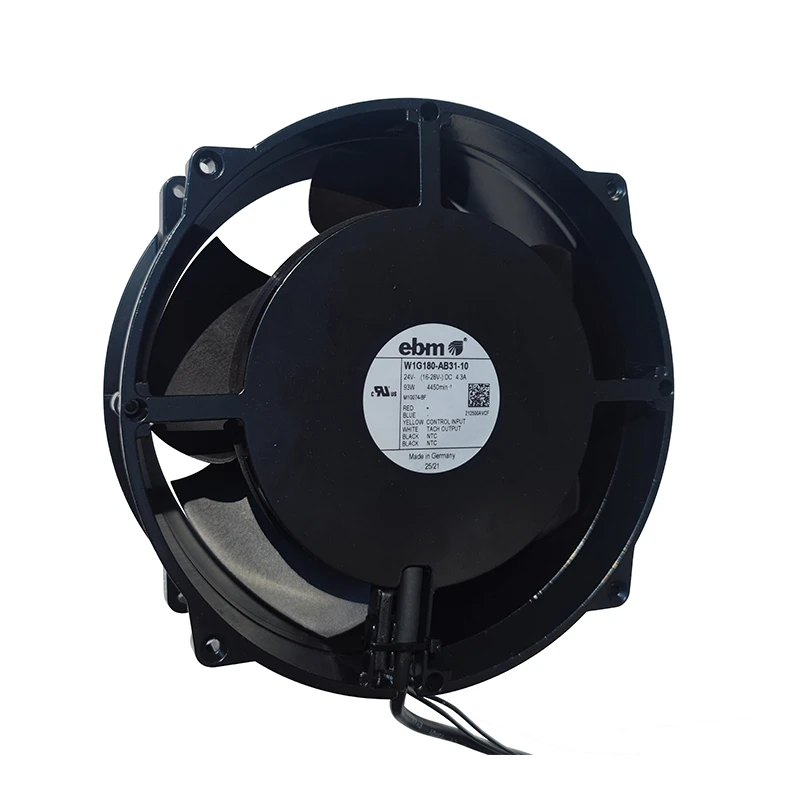
W1G180-AB31-10 | ebm-papst 24V 93W EC Axial Fan for Industrial Equipment Cooling

Engineered around Industrial Equipment Cooling, the ebm-papst W1G180-AB31-10 is a 24 V EC axial fan, recognized through a documented speed of 4,450 rpm. This supports duty-point selection.

24 180 995 305 93 4450 -
W1G180-AB31-01 | ebm-papst 24V 93W EC Axial Fan for Industrial Equipment Cooling

Assigned to Industrial Equipment Cooling, ebm-papst W1G180-AB31-01 is a 24 V EC axial fan, with a focus on a documented speed of 4,550 rpm. It supports an evidence-based shortlist.

24 180 995 305 93 4550 -
A3G630-AR85-90 | ebm-papst 3~380-480V 970W EC Axial Fan for HVAC Systems

Selected for HVAC Systems, ebm-papst A3G630-AR85-90 is a 380-480V EC axial fan, marked by 630 mm dimensions for installation planning. It provides a practical sizing reference. Its documented data supports integration planning.

3`380-480 630 - - 970 1140 -
Showing
81-100
1-20 21-40 41-60 61-80 81-100 101-120 121-132
of 132
1 2 3 4 5 6 7
GO page

About EC Axial

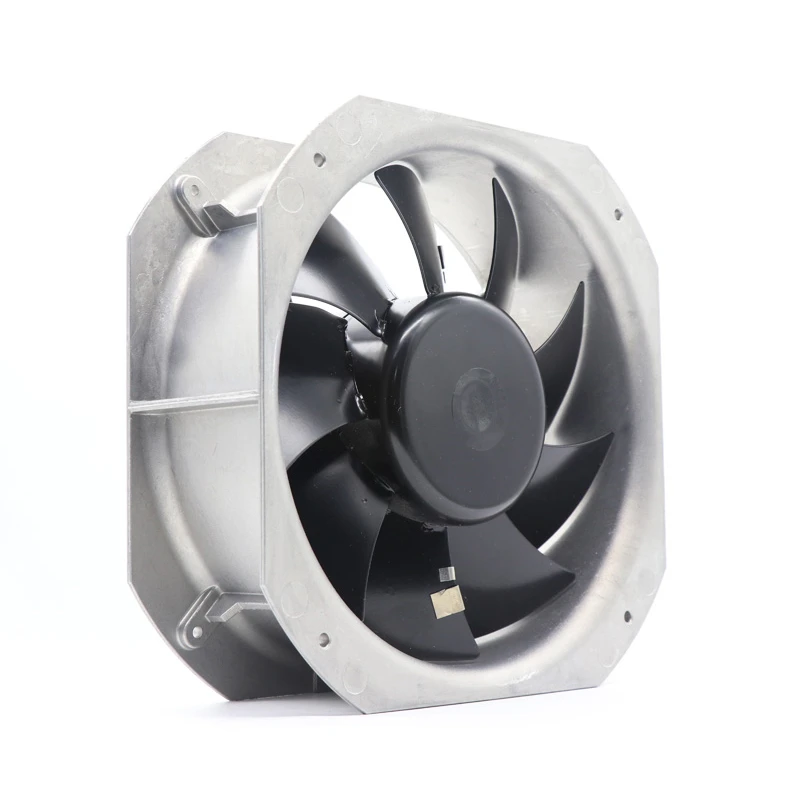
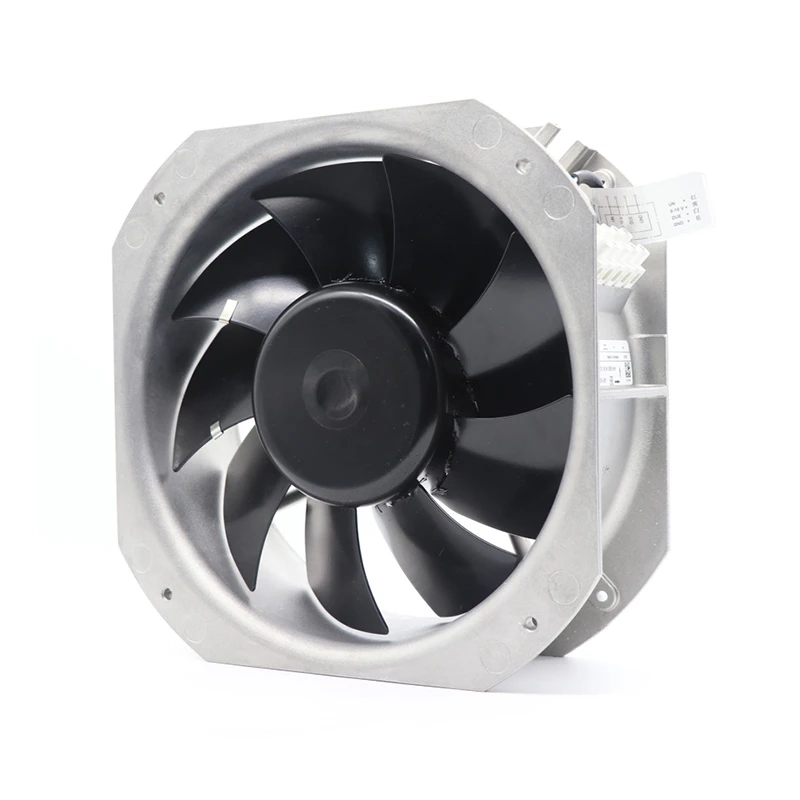
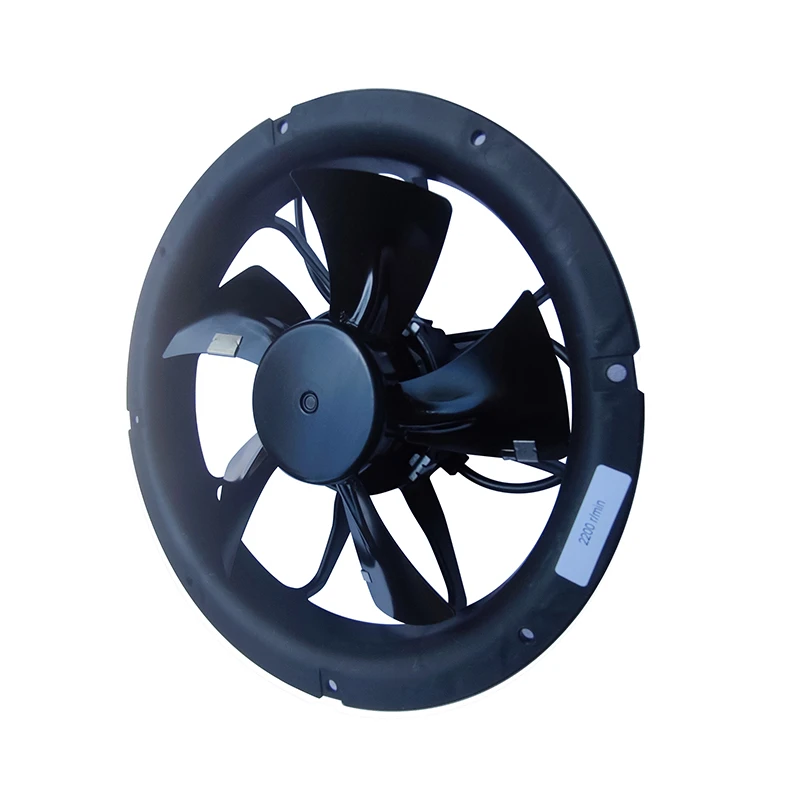
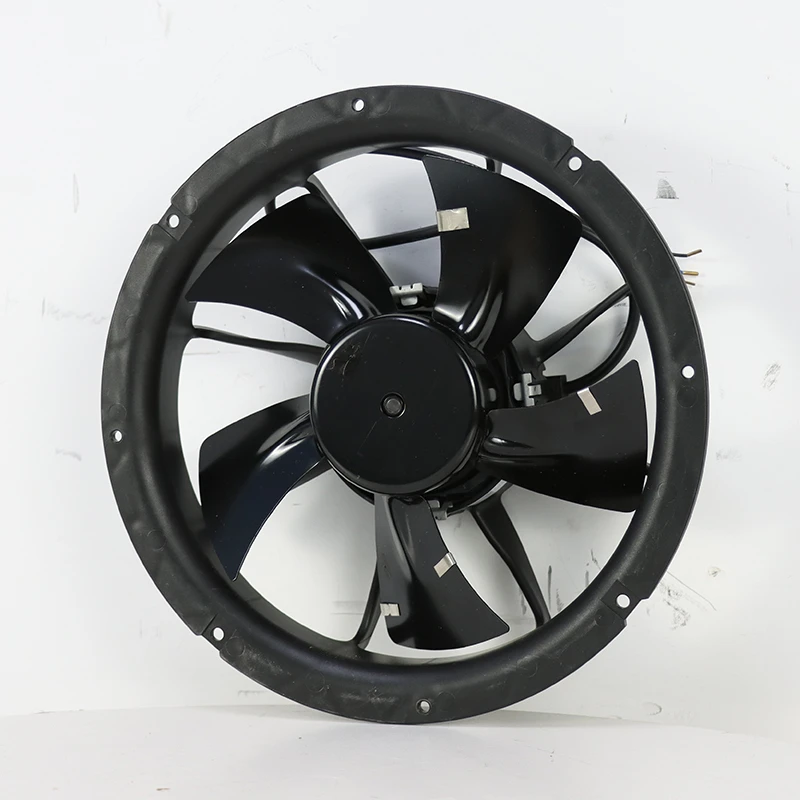
EC axial fans use Electronically Commutated motor technology to deliver unmatched energy efficiency in axial flow fan applications. The EC motor combines a rotor with permanent neodymium magnets and a stator with electromagnets, with electronic circuitry managing the commutation timing for optimal torque and efficiency. Unlike traditional AC induction motors that operate at fixed speed, EC motors achieve peak efficiency across a wide range of operating speeds, making them ideal for variable-load applications. Key EC axial fan product series include ebm-papst AxiEco (featuring the patented GreenTech EC technology), ZIEHL-ABEGG ZAplus EC (with integrated power electronics), and Rosenberg EC axial fans (optimized for high-volume production). EC axial fans are most commonly used in air handling units, condenser cooling, data center ventilation, and energy retrofitting of existing AC fan installations where the energy cost savings justify the premium investment. Hengrui supplies EC axial fans from all major brands with energy calculation tools to help customers evaluate ROI for EC conversion projects.

How to Select the Right EC Axial

The most reliable way to specify EC Axial is to work from the system, not from the catalog. Measure or calculate the airflow and pressure demand first, add the dimensional limits of the mounting position, and only then shortlist series whose curves cover your operating point with margin.

Electrical matching is the next gate. Confirm the supply voltage — 12 V, 24 V or 48 V DC for compact electronics cooling, 115 V or 230 V AC for equipment and panel cooling — and decide whether you need speed control. EC models accept PWM or 0-10 V signals and report speed through a tachometer output, which makes them the default choice for variable-airflow systems, while AC units remain a cost-effective answer for fixed-speed duty.

Then filter by environment. High ambient temperature, dust or moisture loads dictate the IP rating and bearing choice — ball bearings keep airflow and noise stable over years, while sleeve bearings suit light-duty horizontal mounting. Regulatory needs such as UL, CE and RoHS recognition should be confirmed before the shortlist goes to purchasing, together with a maximum allowed sound pressure level in dBA.

End the process by checking supply, not just specification: confirm current stock, the lead time for follow-up quantities, and obtain datasheets and dimension drawings so the mechanical interface is verified before the PO. Send us your airflow and pressure requirements and our engineers will confirm the best-matched series — 132 products are available in this category today.

Typical Applications and Use Cases for EC Axial

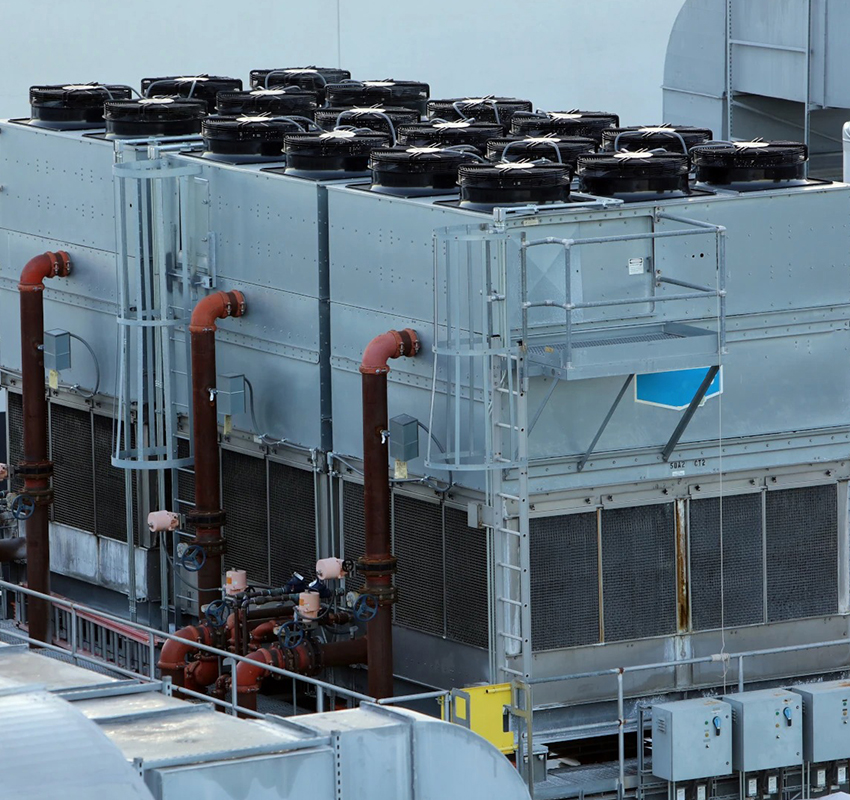
The daily work of our sales engineers is built around EC Axial used in data center cooling, refrigeration and cold chain projects, building ventilation, telecom base stations, medical devices and industrial control cabinets — environments where a stopped fan is a stopped business process. That daily exposure to real installations is exactly what we bring back into every selection: not just reading curves, but knowing which models survive dust, heat, continuous duty and restricted service access.

A typical case: an equipment builder needed to replace an aging AC fan inside a control cabinet that could not be taken offline for more than an hour. By cross-referencing the frame dimensions, voltage and airflow curve, we supplied a current-series drop-in replacement with a matching tachometer signal, and the swap was completed during a scheduled maintenance window.

Refrigeration and cold chain customers bring us another pattern: the failed condenser fan is unavailable for weeks. Comparing diameter, speed, bearings and IP rating, we supply a functionally equivalent unit from stock so the system returns to duty the same week — the reason many service companies keep our contact number on file.

From one-piece emergency replacements to volume supply for equipment manufacturers, every ebmpapst enquiry is handled by the same rule: verify the parameters first, then quote — so what arrives on site is the fan the project actually needs.

Frequently Asked Questions About Buying EC Axial

Can I order a single piece or request a sample before a bulk purchase?

Single-piece orders and samples are welcome — many customers validate one unit in their system before committing to volume. There is no minimum order quantity for standard stock models, and the sample price is deducted from the bulk order in most repeat purchases. Tell us the quantity you plan to use and we will quote both scenarios.

Do you support customized or OEM versions of EC Axial?

Yes. Beyond catalogue models we can discuss modified lead wires, connectors, speed curves, IP upgrades or private-label packaging for OEM projects. Customization usually starts from a defined annual quantity; our engineers will review your requirement and confirm feasibility, tooling cost and lead time before any commitment.

What warranty and after-sales support do you provide?

Every unit is covered by the manufacturer's warranty against defects in materials and workmanship, and we support you through the whole claim process so you deal with one supplier instead of chasing a factory overseas. If a failure appears in service, send us the serial number, operating conditions and photos, and we will arrange the replacement or credit path agreed in the quotation.

Bag

Bag packaging indicates that a specified quantity of product is packaged by the manufacturer in a bag, sealed pouch, or similar container and sold as a unit without repackaging. It is also used to describe kits/assortments where components are packaged in separate bags according to part number or parametric value, rather than in a compartmentalized box or similar rigid container.