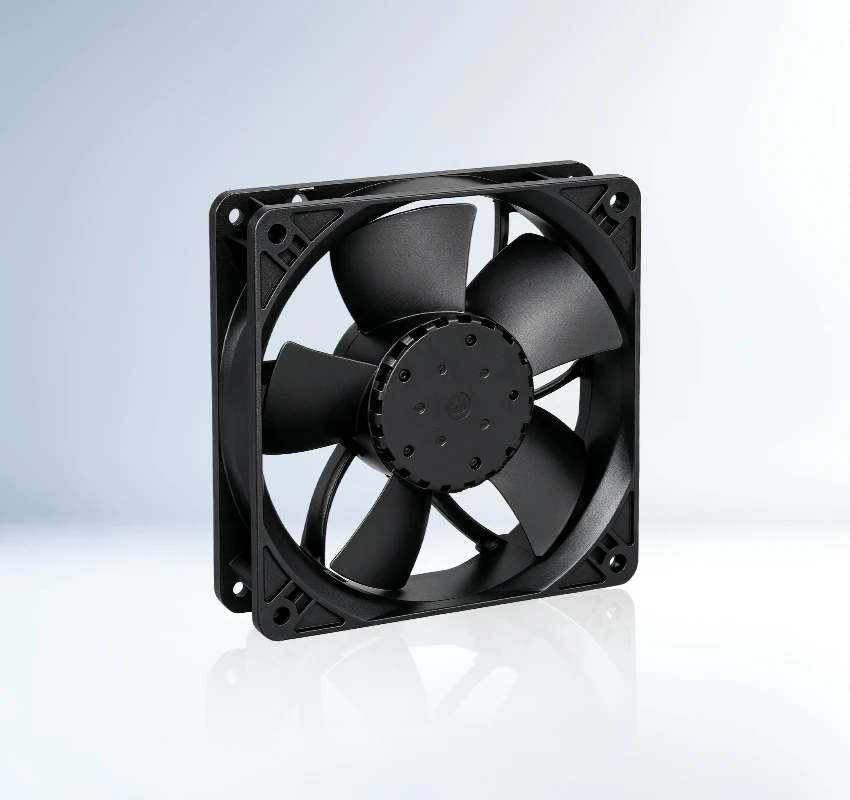
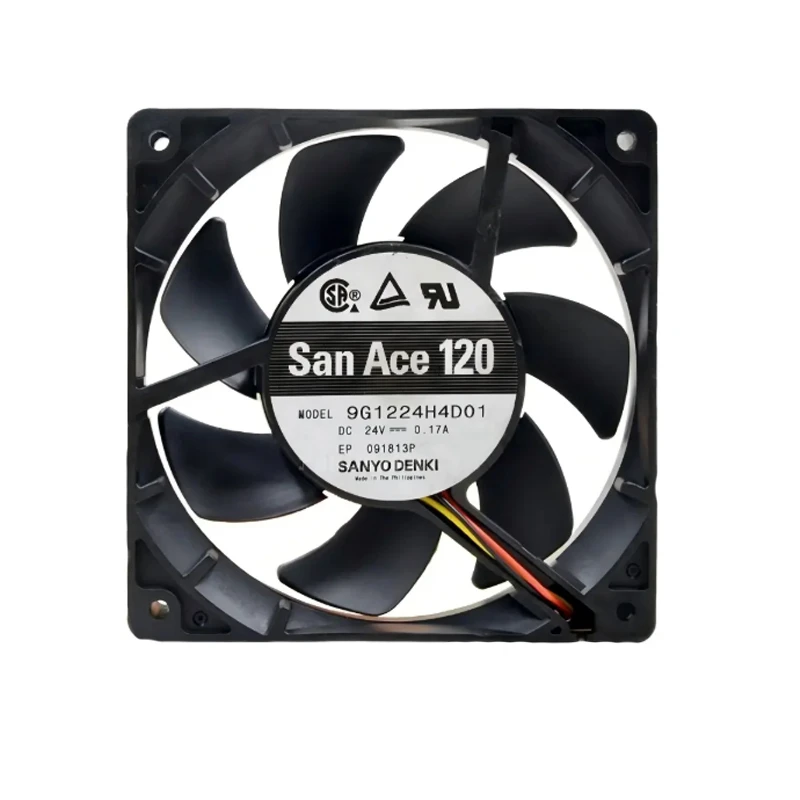
Sanyo Denki configures 9G1224H4D01 for servers, UPS systems, and telecom equipment as a 24 VDC DC axial fan with 120 × 120 × 25 mm dimensions. Its 2850 rpm rating defines a lower-speed operating point. For thermal validation, start with the supplied motor input. Obtain the applicable curve before final duty-point approval.
| Rated Voltage(V) | 24 |
|---|---|
| Size(mm) | 120*120*25 |
| Max.Air Flow(m³/h) | 151 |
| Input Power(W) | 4.08 |
| Speed(rpm) | 2850 |
| Noise(db) | 40 |
SANYO DENKI positions 9G1224H4D01 as a DC axial fan for servers, storage systems and ICT equipment. It helps equipment designers manage local hot spots where natural convection is insufficient.
The specified maximum airflow of 151 m3/h provides a measurable basis for estimating air exchange and selecting the required cooling margin. Buyers should confirm the complete suffix, connector, sensor output and control option before ordering. Engineers should validate the operating point with the actual grille and filter.
Test component temperatures at peak load. This provides buyers with a traceable selection basis. Confirm the final fan curve in the assembled equipment. Preserve clear inlet and outlet space during installation.
SANYO DENKI 9G1224H4D01 serves server chassis and computing nodes that operate with sustained internal heat. Directed airflow carries component heat toward the equipment exhaust and helps maintain a controlled internal temperature. It supports reliable OEM equipment cooling.
9G1224H4D01 is suitable for storage arrays and data appliances. Reliable ventilation reduces hot spots around sensitive electronics and supports consistent equipment availability. It supports reliable OEM equipment cooling. Selection should follow the approved full model code.
The San Ace 9G1224H4D01 supports thermal management in network and other ICT hardware. Reliable ventilation reduces hot spots around sensitive electronics and supports consistent equipment availability. It supports reliable OEM equipment cooling. Selection should follow the approved full model code.
The exact bearing is not stated in the supplied row. Confirm it from the complete model suffix and current Sanyo Denki datasheet.
Check its 120 × 120 × 25 mm size, 151 m³/h airflow, mounting points, airflow direction, and system resistance.
The workbook marks it RoHS compliant. Confirm model-specific UL, CSA, TÜV, or other required approvals from official documentation.
No exact IP rating is supplied for this model row. Check the current model datasheet before use in water, dust, or oil exposure.
Inspect dust buildup, airflow blockage, abnormal noise, mounting security, and wiring condition; disconnect power before service.
Availability and lead time can change. Confirm the exact suffix, quantity, and delivery date with the supplier before ordering.

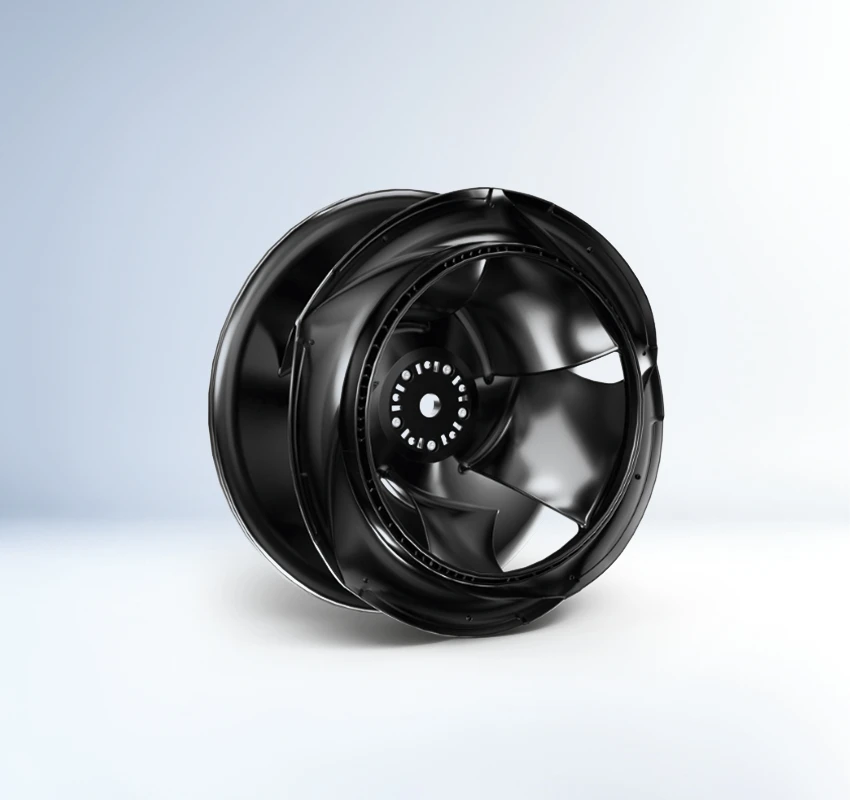
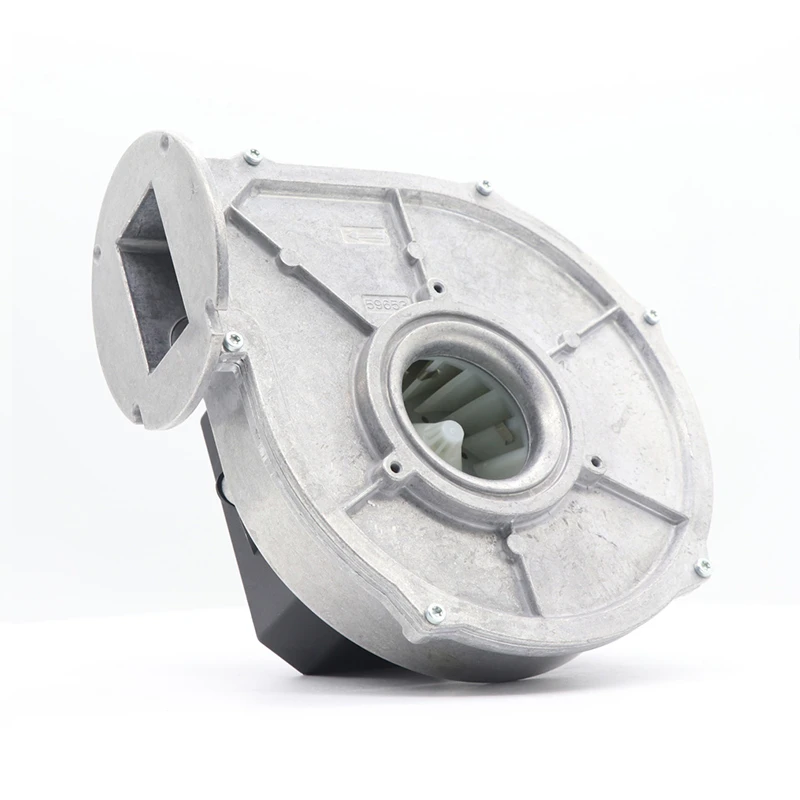
Aimed at Boiler Systems, the ebm-papst G1G146-BA07-52 is a 24 V EC backward-curved centrifugal fan, for which the table lists a listed pressure capability of 500 Pa. This assists electrical and mechanical review.
Read More
Integrated into Boiler Systems, the ebm-papst G1G133-DE19-15 is a 24 V EC backward-curved centrifugal fan, specified with a documented 45 W input rating. The rating aids system-fit checks.
Read More
Suited to Boiler Systems, ebm-papst G1G097-AA05-01 is a 24 V EC backward-curved centrifugal fan, marked by a documented 16 W input rating. It provides a practical sizing reference.
Read More
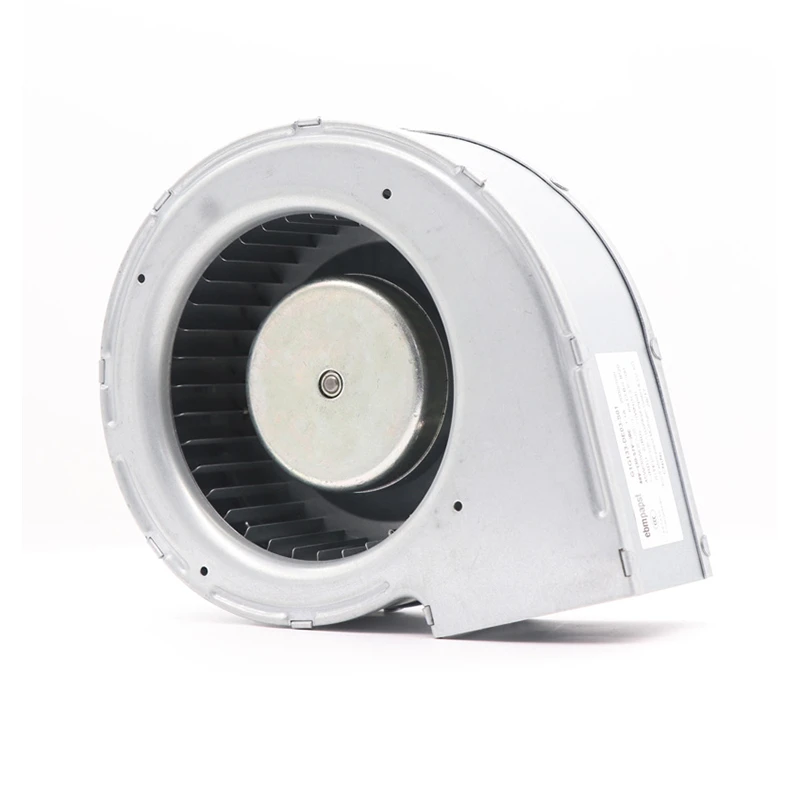
In inverter cooling, G2D180-BD18-13 serves as a 400 V AC centrifugal blower. Its standout data point is 840 Pa pressure with IP00 protection. It supports exact-model comparison for OEM sourcing and replacement work.
Read More
G2D180-BD18-11 is specified as a 400 V AC centrifugal blower for cnc machines. Its selection profile is led by 700 Pa pressure with 2,650 rpm operation. It supports exact-model comparison for OEM sourcing and replacement work.
Read More
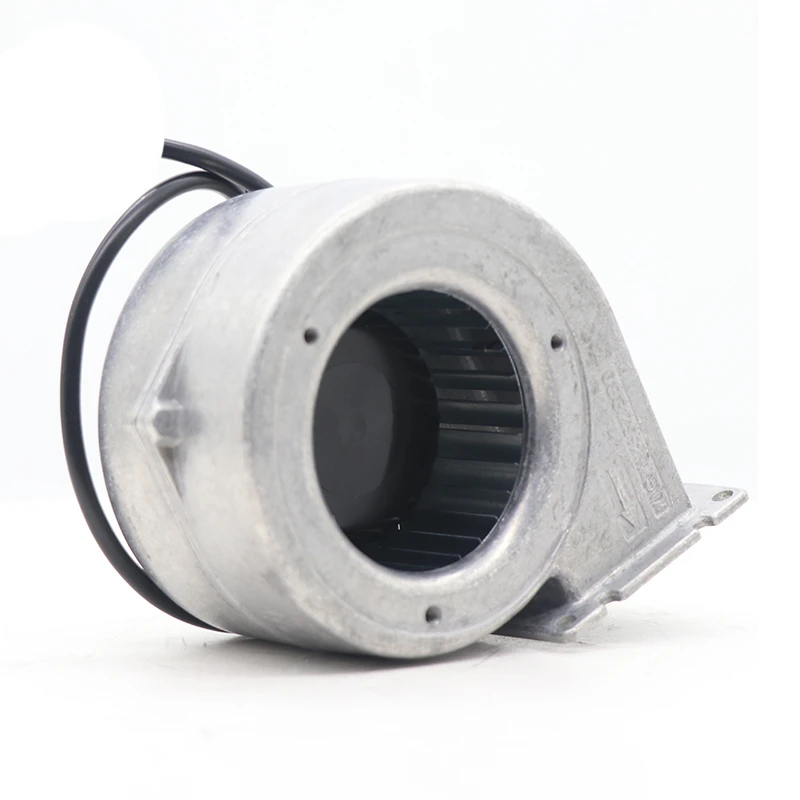
Designed around motor cooling, G2D160-AF02-09 uses a 230 V AC centrifugal blower platform. The model's defining specification is IP44 protection with 2,300 rpm operation. It supports exact-model comparison for OEM sourcing.
Read More